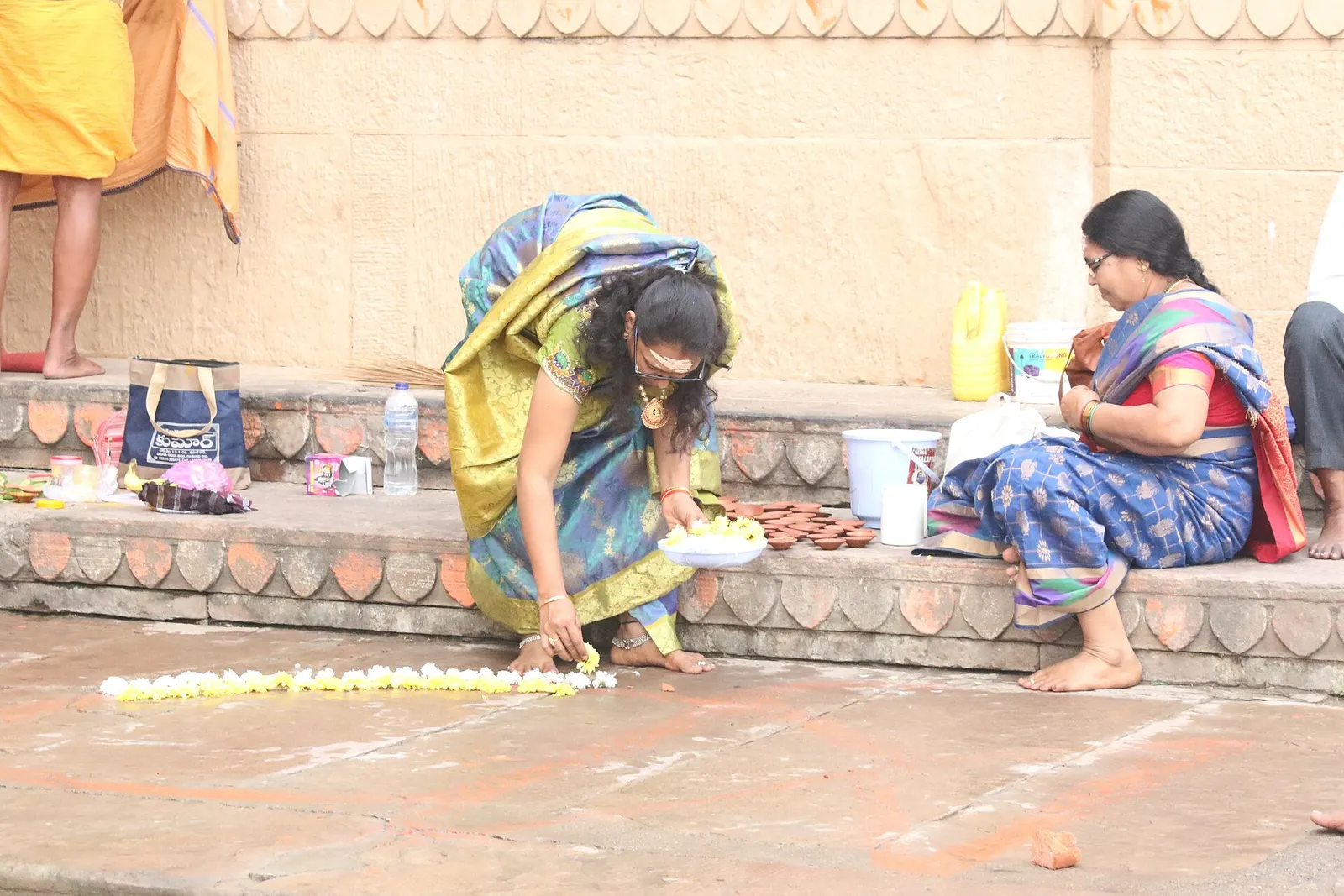
Tarpan vs Pind Daan: What's the Difference?
By DevPravas Editorial Team · · 7 min read
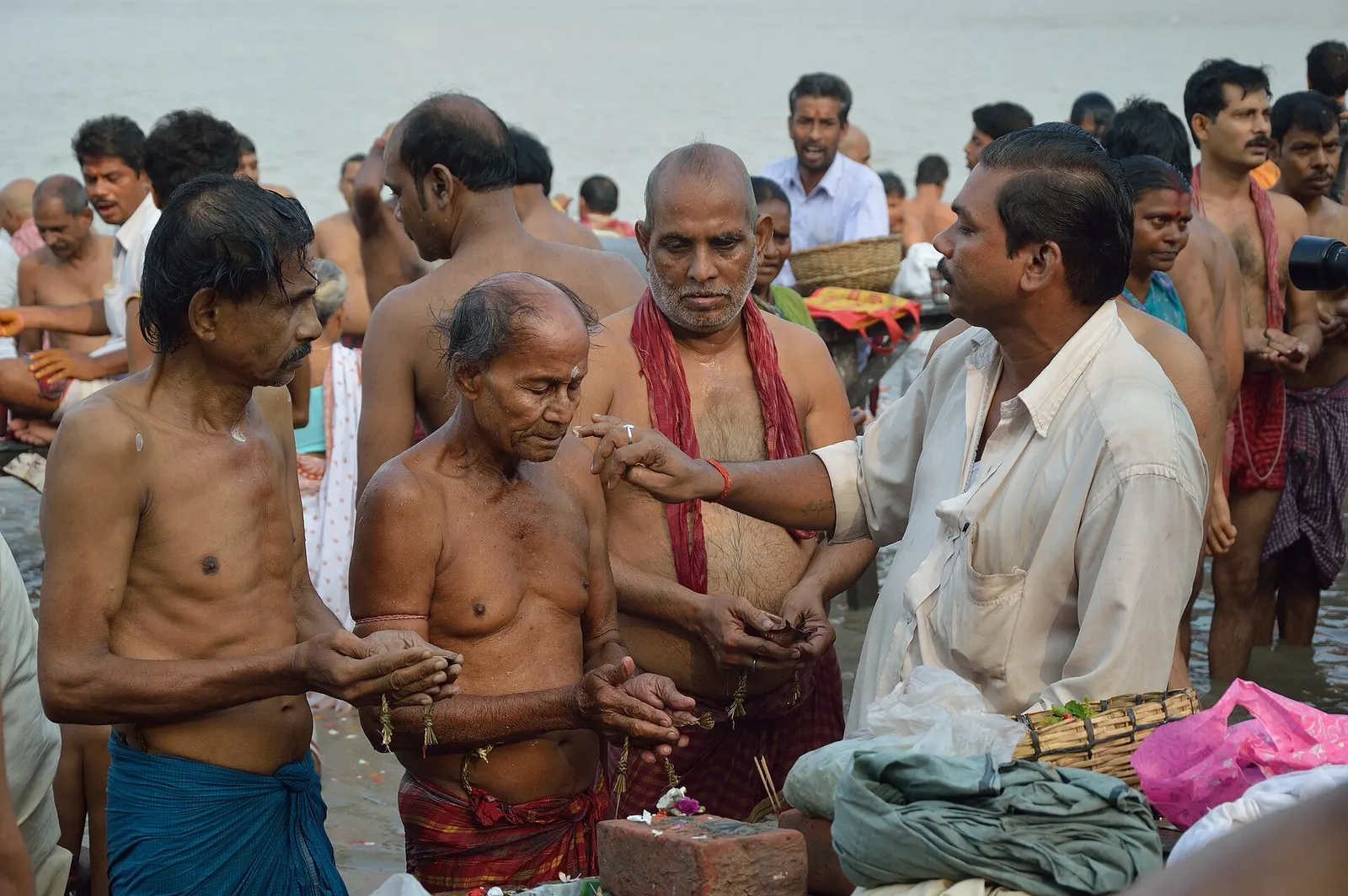
On Mahalaya morning in Kolkata, before dawn, the ghats along the Hooghly fill with men standing waist-deep in the river, cupped hands raised, letting water mixed with sesame run back into the current as they say their fathers' and grandfathers' names. A friend who grew up there did this every year for a decade before a priest mentioned, almost in passing, that what her family also needed at some point was Pind Daan, a rite she'd never heard named separately. Nobody had explained the difference.
That mix-up is common. Tarpan vs Pind Daan is one of the most searched questions around Pitru Paksha, and for good reason. The two rituals share a purpose, often happen in the same sitting, and are frequently lumped together as "the ancestor puja." This explainer separates them clearly, for families in India and abroad alike.
Pitru Tarpan meaning: the water offering
The word tarpan comes from the Sanskrit root trip, "to satisfy." The Pitru Tarpan meaning is exactly that: satisfying the ancestors' thirst with an offering of water, usually mixed with black sesame (til), barley and kusha grass. The water is poured from cupped hands while each ancestor's name and gotra are recited.
Tarpan is comparatively brief and is the most frequently repeated ancestral rite. Some observant households do it daily, many on Amavasya (the new moon), and very many throughout Pitru Paksha. Its scope is broad: traditional forms offer water to the gods (deva tarpan), the sages (rishi tarpan) and the ancestors (pitru tarpan), including father, mother, grandparents on both sides, and ancestors whose names are no longer remembered.
Think of Tarpan as ongoing acknowledgment. It needs little setup, and many households perform a simple version at home. In Pitru Paksha, though, many families prefer a pandit to perform it fully, on the right tithi.
Pind Daan meaning: the offering of form
Pind Daan is more elaborate and performed less often. It involves preparing pindas, balls of cooked rice or rice flour mixed with ghee, honey and black sesame, and offering them with mantras on behalf of a specific person who has died.
The Pind Daan meaning lies in that difference: where Tarpan offers water, Pind Daan offers form. The traditional belief is that after death a soul exists for a time without a settled body, in an in-between state (preta). The pinda symbolically provides that body and nourishment, helping the soul move on to join the ancestors. That's why Pind Daan is performed at defined moments: after a death, at the first-year rites, on death anniversaries, and especially during Pitru Paksha, often at a tirtha such as Gaya, Prayagraj or Varanasi.
Pind Daan almost always calls for a qualified pandit. For a full walkthrough of the steps, see what happens during Pind Daan on the ghats of Prayagraj, and for more on its meaning and who performs it, read Pind Daan explained.
Tarpan vs Pind Daan at a glance
| Tarpan | Pind Daan | |
|---|---|---|
| What is offered | Water with black sesame, barley and kusha | Rice balls (pindas) with ghee, honey and sesame |
| Purpose | To satisfy and honour ancestors | To help a specific soul's onward journey |
| How often | Daily, on Amavasya, and through Pitru Paksha | After death, first-year rites, anniversaries, Pitru Paksha |
| Who it's for | Ancestors broadly, plus gods and sages | Usually a named person, often up to three generations |
| Pandit needed? | Can be done simply at home | Usually performed with a pandit |
So which one do you need?
A rough guide, though a pandit from your family's tradition is always the best judge:
- A general Amavasya or Pitru Paksha remembrance for ancestors, with no specific concern → Tarpan is usually sufficient.
- A parent's or close relative's death anniversary, or the first-year rites → Pind Daan is usually expected, often with Tarpan in the same sitting.
- A family feeling that ancestral rites were left incomplete, sometimes described as Pitra Dosha → Pind Daan is the more thorough response, sometimes alongside other rites a pandit may suggest.
Both, in the same sitting
In practice, especially during Pitru Paksha, many families have both performed together: Tarpan first, as the water offering and invocation, then Pind Daan for the specific ancestor. It's less an either-or choice than a sequence.
Ancestor rituals for Hindus living abroad
For families in Toronto, Tarpan is often the rite they can do themselves: a bowl of water, a few sesame seeds, kusha if the local Indian grocer has it, and the names spoken at home on the right morning. Some families take it to the shore of Lake Ontario. Pind Daan is harder, because it traditionally wants a pandit and, ideally, a tirtha. So for Hindus living abroad, ancestor rituals often mean a mix: Tarpan at home, and Pind Daan performed by a pandit in India while the family joins live.
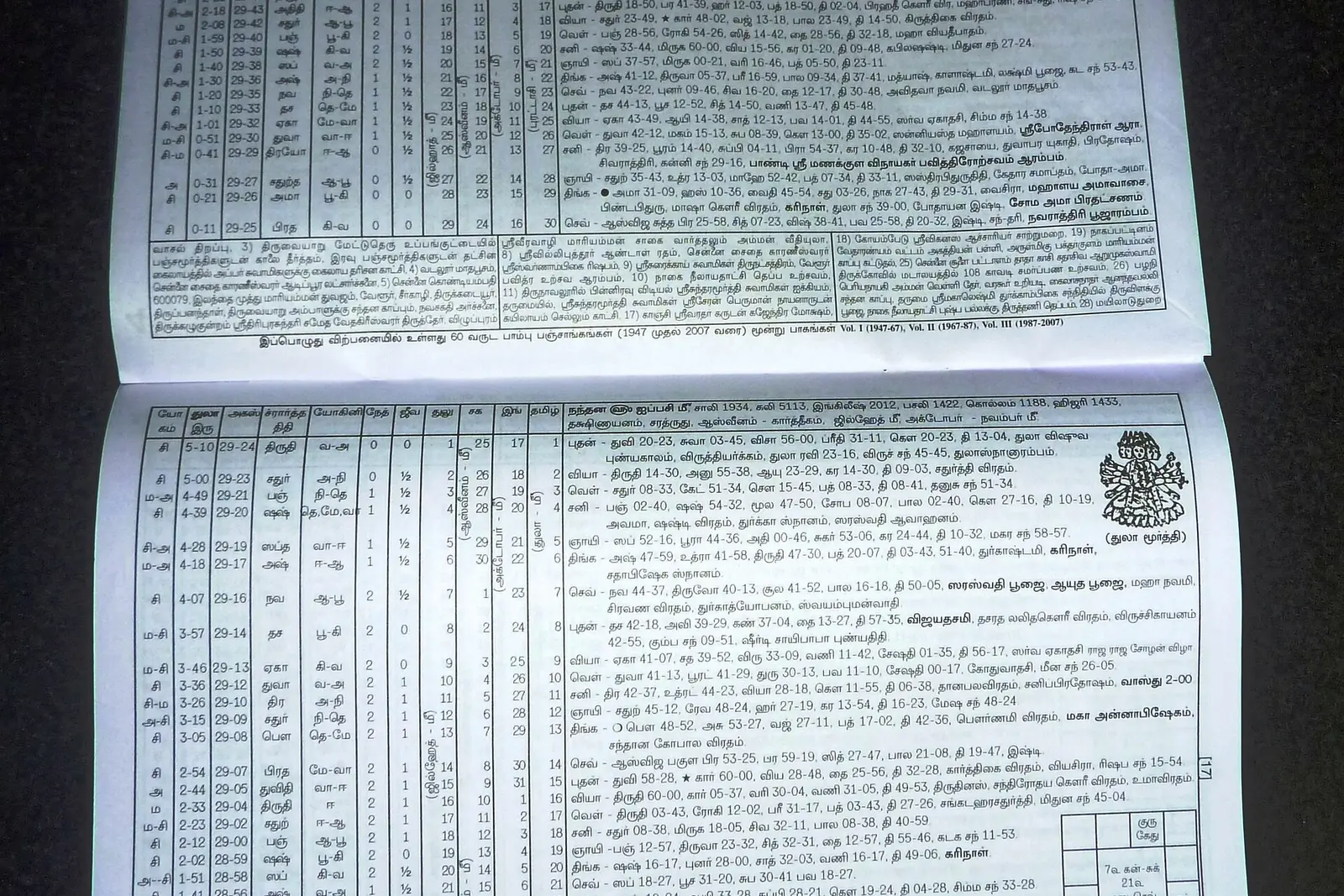
Timing is the one detail worth checking. In Kolkata, Mahalaya this year falls on Saturday, October 10, the same day as Sarva Pitru Amavasya across India. In Toronto, drikpanchang's local listing puts Sarva Pitru Amavasya a day earlier, on Friday, October 9, because tithis are counted from local sunrise. The usual rule of thumb: if you're performing Tarpan yourself in Toronto, follow your local panchang. If a pandit in India is performing the rite for you, the Indian date applies. When the two differ, a quick question to the pandit settles it.
Having ancestral rites performed from home
Many families search the Hinglish phrase ghar baithe puja kaise karayein, "how can we get a puja done while sitting at home?" For ancestral rites, the answer is a pandit at a riverbank in India, your names and gotra in the sankalp, and you taking part live. DevPravas performs Pitru Tarpan (listed from ₹4,700) and Pind Daan (from ₹4,700, or ₹5,700 with live stream) on the ghats of Gaya or Ujjain. Other ancestral rites are listed on the pujas page, and time-zone help is on our NRI page.
FAQ
What is the main difference between Tarpan and Pind Daan?
Tarpan offers water with sesame to satisfy and honour ancestors, and it's brief, frequent and broad in scope. Pind Daan offers rice-ball pindas on behalf of a specific person, to help that soul's onward journey, and is performed at key moments like anniversaries and Pitru Paksha. See Pind Daan on the ghats of Prayagraj for the full ritual.
Can I do Tarpan at home without a pandit?
Yes. Many households perform a simple Tarpan at home, pouring water with black sesame from cupped hands while reciting ancestors' names and gotra, especially on Amavasya. During Pitru Paksha, many families prefer a pandit to perform the full rite on the correct tithi, which devpravas.in offers as Pitru Tarpan on the ghats of Gaya or Ujjain.
Is Tarpan vs Pind Daan an either-or choice during Pitru Paksha?
Usually not. Many families have both performed in one sitting, Tarpan first and then Pind Daan for a specific ancestor, especially on that ancestor's tithi or on Sarva Pitru Amavasya (October 10, 2026). Check the right day in our 2026 Shraadh tithi calendar.
If my family has only ever done Tarpan for a parent, have we done something wrong?
Not at all. Tarpan is a meaningful rite in its own right. But if Pind Daan was never performed for that parent, it may be worth asking a pandit about your family's tradition, since the two serve different purposes. You can review the Pind Daan puja and ask a coordinator any questions first.
Who can perform Tarpan and Pind Daan? Does it have to be a son?
Tradition often centres the eldest son, but practice has broadened, and daughters, grandsons and other relatives perform both rites, especially when there's no son or he can't take part. Customs vary by community, so a pandit can guide you. Our FAQs on who can perform Shraadh cover this in depth.
Have one or both performed, correctly, wherever you are
Understanding Tarpan vs Pind Daan is the first step; the second is simply doing it, on the right day, with the right names. Whether your family needs a Tarpan, a full Pind Daan or both together, message us on WhatsApp to talk it through, or book online.
Share this article
Found this useful? Pass it on to a family member who is weighing the same question.