Pind Daan in Prayagraj: What Happens on the Ghats of the Sangam
By DevPravas Editorial Team · · 6 min read

Before sunrise, the ghats at Prayagraj are already busy. Pandas and pandits sit on wooden platforms near the water, brass vessels and trays of rice, sesame and flowers laid out in front of them. Families arrive in twos and threes: a son and his mother who left Lucknow at 3 AM to beat the traffic, a local family who walked down from Daraganj, and cousins who took the overnight train. They all carry the same quiet purpose: to give their ancestors peace.
If you've never seen a Pind Daan Prayagraj ceremony, or never fully understood what's happening beyond "a ritual for the dead," this post walks through it plainly: why the Sangam, what each step means, how long it takes, and what to do if your family can't travel this year.
Pind Daan Prayagraj: why the Sangam matters
Prayagraj sits at the Triveni Sangam, the confluence of the Ganga, the Yamuna and the unseen Saraswati. It's often called Tirtharaj, the king of pilgrimage places. Along with Gaya and Varanasi, it is one of the places most closely associated with ancestral rites. In Hindu ritual, water carries offerings to the ancestors, and a meeting of three sacred rivers is understood to carry them with special force.
Gaya holds the highest place for Pind Daan in the Puranic tradition. Prayagraj is honoured above all for Tarpan and Shraadh at the confluence, and during Pitru Paksha the ghats are at their busiest. Many families perform Pind Daan at the Sangam during these weeks, and some travel on to Varanasi and Gaya on the same journey. For the scriptural background, see why Prayagraj is considered sacred for ancestral rites.
The ritual doesn't fail elsewhere. Families choose the Sangam because this ground carries centuries of meaning, and they want their offering to draw on it.
Ritual steps: the Pind Daan process, step by step
Families' pandas and local traditions vary, but a typical Pind Daan process, step by step, looks like this:
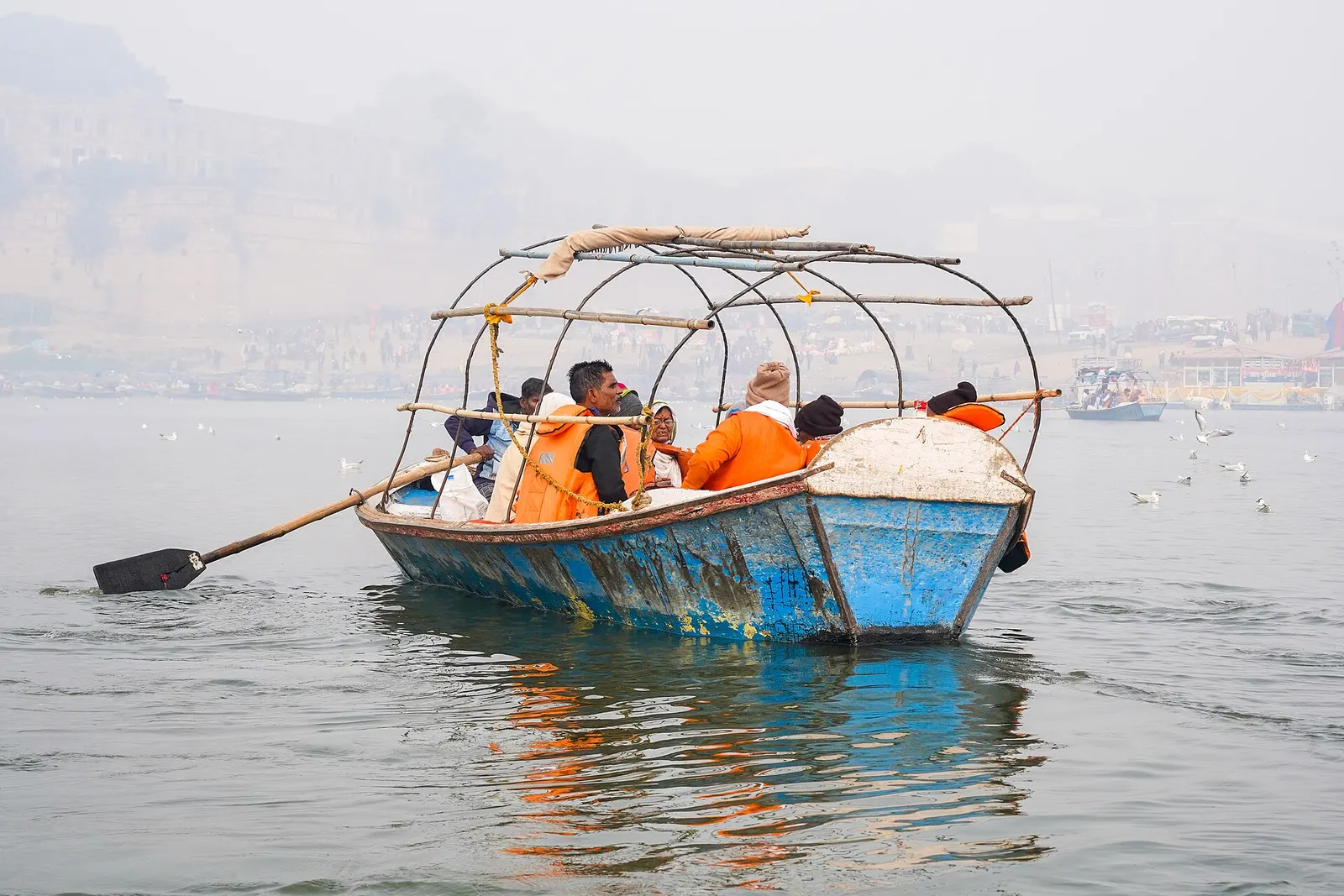
1. Snan, the purifying dip. Where possible, the person performing the rite bathes at the Sangam, often reached by boat to the confluence point itself.
2. Sankalp, stating the intention. The performer states their own name, gotra and relationship to the ancestor, and the purpose: peace and release for that soul. Traditionally this is the eldest son, though practice has broadened. Families often name three generations of ancestors.
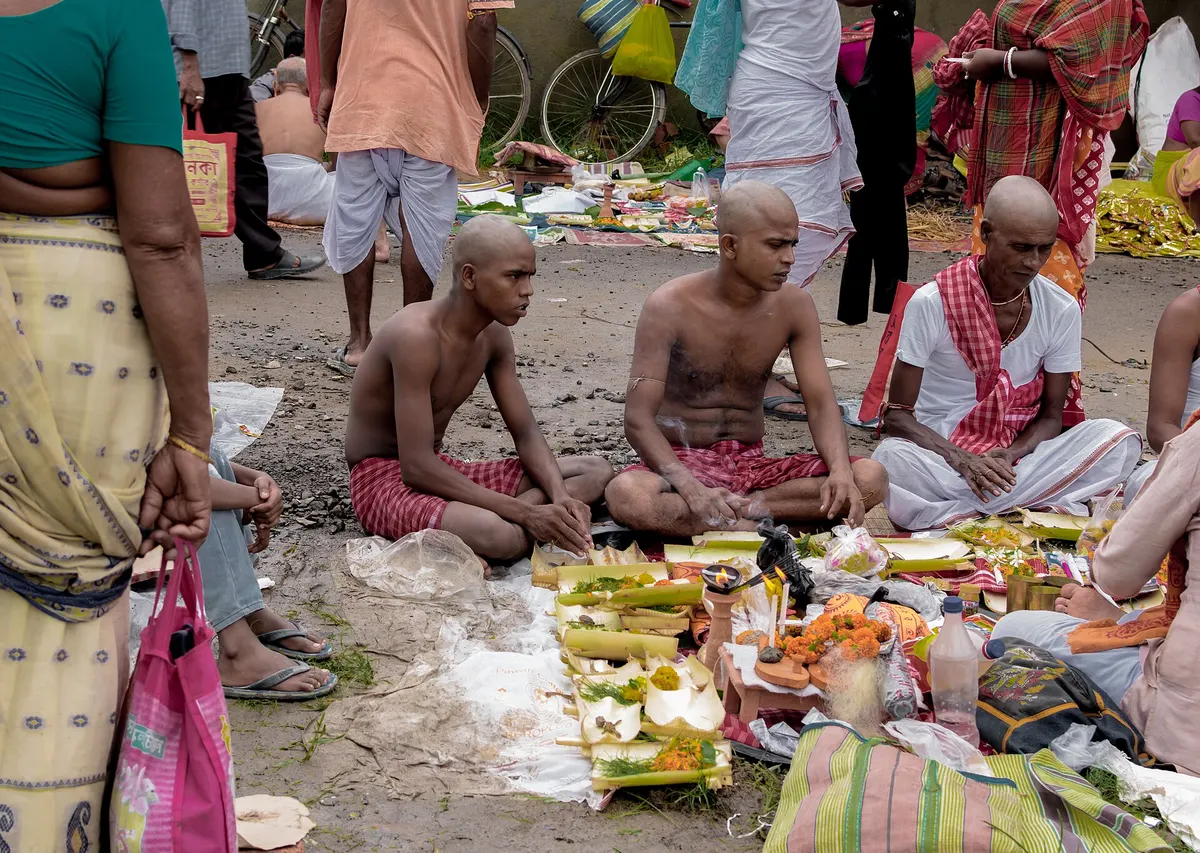
3. Preparing the pinda. Cooked rice or rice flour is mixed with black sesame, ghee, honey and sometimes barley or milk, then shaped into round balls. Each pinda symbolically offers a body and nourishment to the departed.
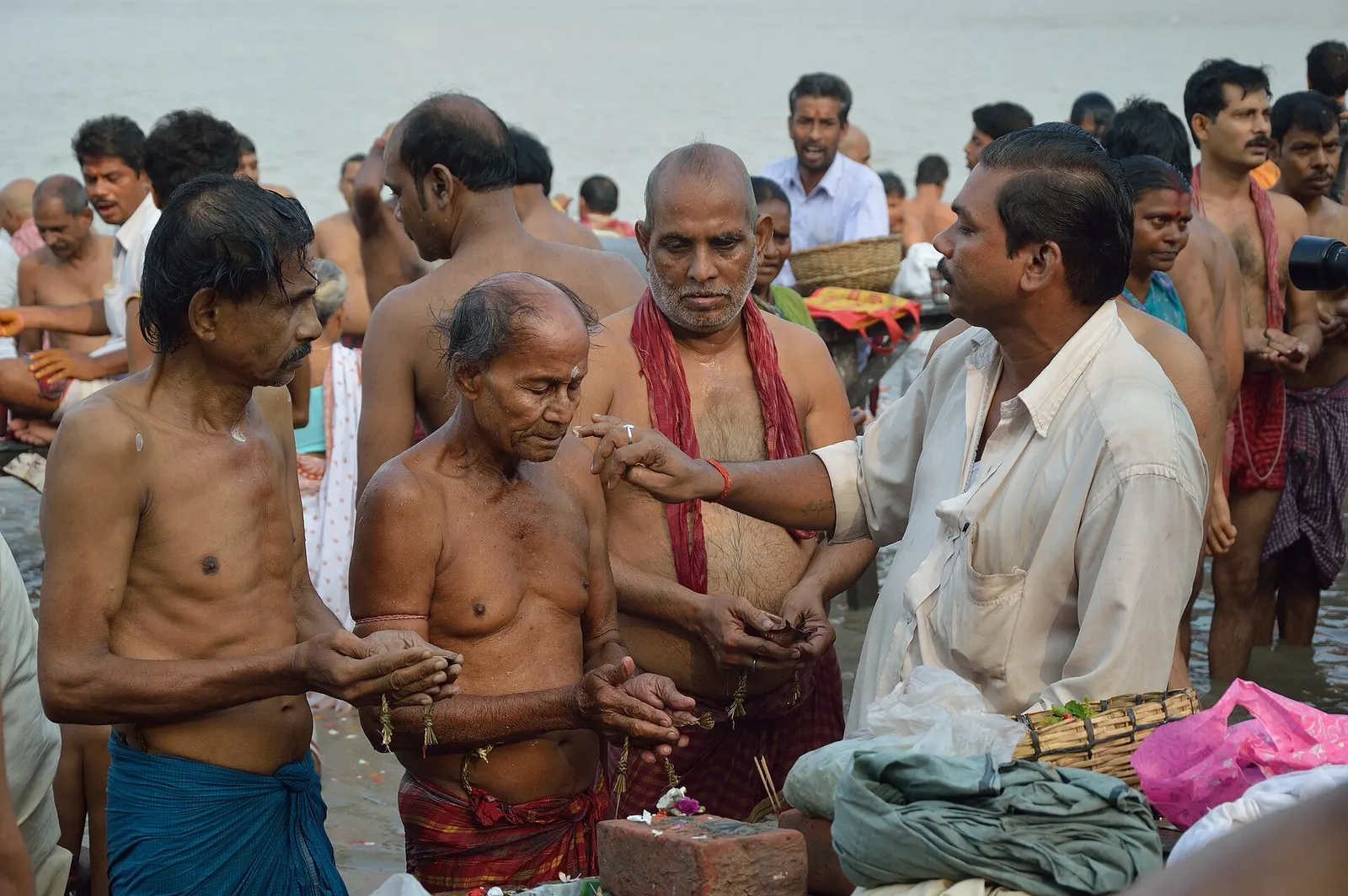
4. Tarpan, the water offering. Water with black sesame and kusha grass is poured from cupped hands while the ancestor's name is invoked. Tarpan is distinct from Pind Daan; see Tarpan vs Pind Daan.
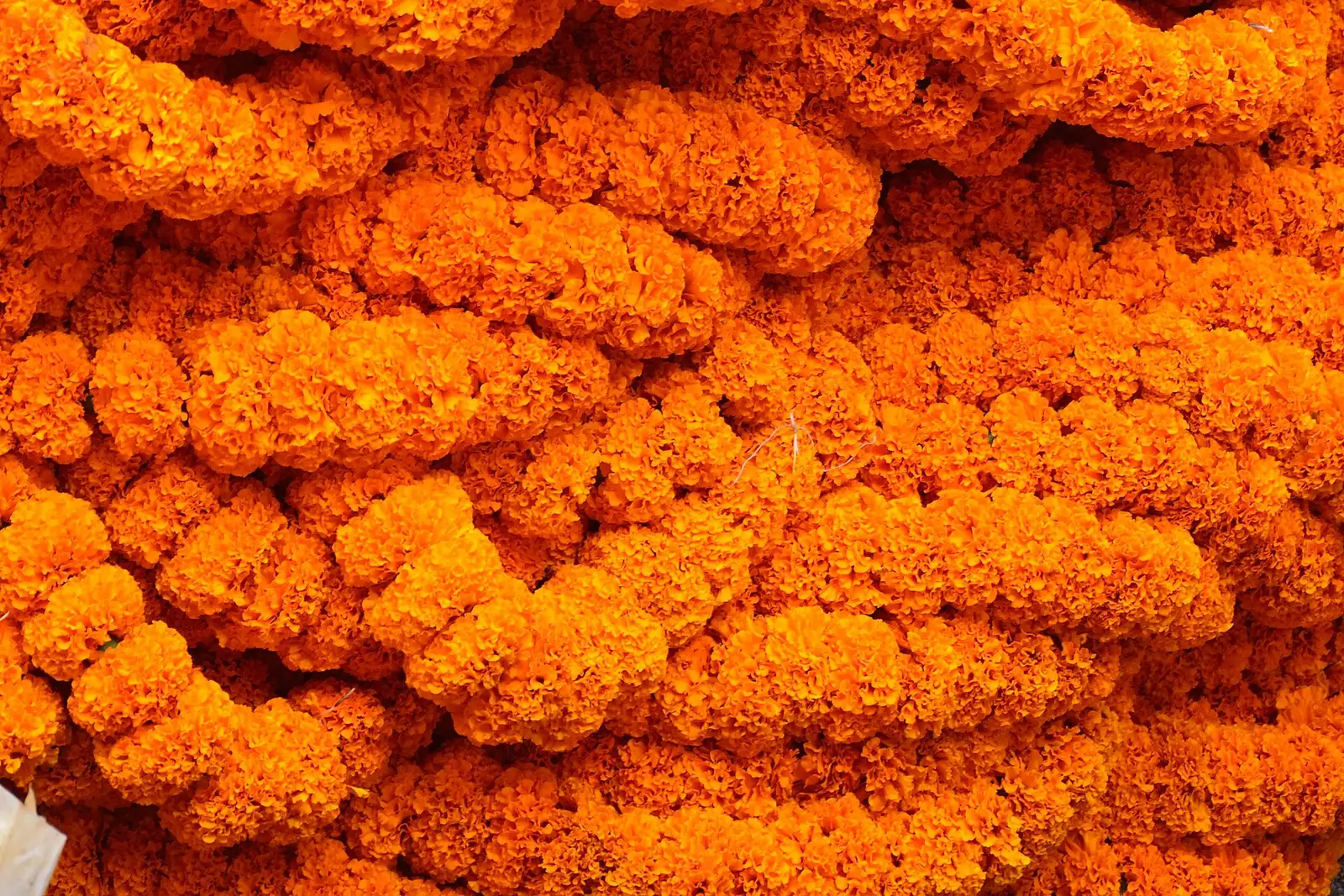
5. Offering the pinda. The pindas are placed on kusha grass with flowers and til while the pandit chants mantras invoking each ancestor's name and lineage.
6. Offerings to others. A portion is set aside for crows, cows and the needy, and many families offer food or dakshina to Brahmins, extending the giving beyond the family.
7. Visarjan, immersion. The pindas are finally offered to the river, completing the rite.
The whole sequence usually takes about one to two hours, depending on how many ancestors are named in one sitting. Families are usually asked to bring the ancestors' names, the gotra, the date or tithi of death, and simple light-coloured clothing. The pandit or panda typically arranges the samagri.
If you're travelling to the Sangam yourself, a few practical notes help. Go early in the morning, when the ghats are calmer and the light on the water is soft. Agree the dakshina and what it covers before the ritual starts, so nothing distracts you once it begins. Many families at Prayagraj go back to the same panda family across generations. These tirtha priests traditionally keep handwritten genealogy registers, and some families find their grandparents' names already recorded there, which can be a moving surprise.
What Pind Daan actually means, beneath the steps
It's worth saying plainly: Pind Daan isn't about death in the way that word usually lands. It's about completion, the belief that a soul's onward journey is helped when the living keep acknowledging, feeding and releasing it with intention. For many families it isn't mainly an obligation. It's the last active thing they get to do for someone they loved, and there's real comfort in that, even amid grief.
Pind Daan online for NRI families, and anyone who can't travel
Not every family can reach Prayagraj. Distance, health, cost and work all get in the way, whether you're in Lucknow with an elderly parent who can't manage the ghat steps or in Toronto with no leave left. Pind Daan online for NRI families, and for anyone in India who can't travel, means a pandit performs the full rite at a sacred river on your behalf, with your names and gotra in the sankalp, while you watch live.
A few honest notes on what DevPravas offers today:
- DevPravas's live Pind Daan is currently performed on the ghats of Gaya or Ujjain, listed from ₹4,700, or ₹5,700 with live stream.
- Live booking from Prayagraj is listed as coming soon on our Prayagraj page.
- If the Sangam specifically matters to your family, you may prefer to travel, or to wait until live Prayagraj booking opens. That's a completely valid choice.
One family, many cities
Families abroad often search in Hindi for pravasi bhartiya puja booking, "puja booking for Indians living overseas." It's a reminder that one family often spans many cities: a grandmother in Prayagraj, a son in Lucknow and a daughter in New Jersey. A live stream lets all three watch the same sankalp at the same moment. Scheduling help for families abroad is on our NRI page, and every ancestral rite we offer is listed on the pujas page.
FAQ
Is a Pind Daan Prayagraj trip essential, or can it be done anywhere?
It can be performed at any sacred river, or at home with a qualified pandit. Gaya, Prayagraj and Varanasi are held in special regard, but correct vidhi, the right tithi and sincere intention are what make the rite complete. Devpravas.in currently performs Pind Daan on the ghats of Gaya and Ujjain, both ancient tirthas.
How long does Pind Daan at the Sangam take, and what should I bring?
Usually one to two hours, depending on how many ancestors are named. Bring the ancestors' names (ideally three generations), the family gotra, the date or tithi of death, and simple light-coloured clothes; the pandit generally arranges the samagri. Our one-week Pitru Paksha checklist covers preparation in more detail.
Which is better for Pind Daan, Gaya or Prayagraj?
Tradition places Gaya first for Pind Daan, while Prayagraj is especially honoured for Tarpan and Shraadh at the confluence. Many families visit both, and many observe that performing the rite during Pitru Paksha matters more than which tirtha you choose. Read why the Sangam is sacred for the fuller picture.
Can Pind Daan be done only during Pitru Paksha?
No. It's commonly performed after a death, at the first annual rites, on death anniversaries and at other auspicious times. Pitru Paksha (September 26 to October 10 in 2026) is considered the most auspicious window. See our 2026 Shraadh tithi calendar for each day's date.
Who is supposed to perform Pind Daan? Does it have to be a son?
Traditionally the eldest son performs it, but in practice daughters, grandsons, brothers and other close relatives also perform Pind Daan when needed, with a pandit's guidance. Our FAQs on who can perform Shraadh explain the tradition and how families handle it today.
Perform it with care, wherever you are
Whether your family travels to the Sangam this year or has the rite performed on their behalf, what matters is the right tithi, the right names and a sincere heart. The Pind Daan Prayagraj tradition carries a very particular meaning, and we hope this guide helps you honour it. To arrange a live Pind Daan in Gaya or Ujjain, message us on WhatsApp or book online.
Share this article
Found this useful? Pass it on to a family member who is weighing the same question.