Raising Hindu Kids in the US Without a Temple Down the Street
By DevPravas Editorial Team · · 6 min read
Her son was six, sitting cross-legged on the rug of their Los Angeles apartment, watching a laptop where a pandit in Ujjain was mid-mantra. "Mumma," he asked, "why don't we just go to the mandir like Priya's family?" The honest answer - the nearest temple was 45 minutes away in traffic, her husband worked Saturdays - felt too small for what he was really asking: are we still the kind of family that does this? That question sits at the heart of raising Hindu kids in the US.
If you live somewhere with no temple nearby, or one that only feels reachable a few times a year, you know this ache. It isn't dramatic. It's a slow erosion, one skipped Saturday at a time, until you realise your child has never seen a havan lit.
The Quiet Worry Every NRI Parent Recognises
Talk to enough Indian parents in America and a pattern appears. Few worry that their kids will reject Hinduism outright. What they worry about is dilution: Diwali becoming "the day we get sweets", a child who can sing every song from a Disney film but not a single shloka, "gotra" being a word they've heard but couldn't explain.
It isn't only a Los Angeles problem - families in Ottawa, where winter can make even a short drive to the temple feel like an expedition, describe exactly the same thing. LA's sprawl just makes it literal: a temple can exist and still not be part of your weekly life when it's ninety minutes each way on the 405.
Raising Hindu Kids Without a Temple Nearby: What Actually Works
The parents who handle this best aren't necessarily the ones who found a closer temple. They're the ones who stopped treating ritual as something that only counts at a temple, and built it into the rhythm of the house. Raising Hindu kids without a temple nearby is less about access and more about repetition.
- Make the child a participant, not a spectator. Handing your son the bell, or letting your daughter place the flowers, turns puja from something adults do at them into something they do with you.
- Anchor the calendar. Kids build identity through repetition. If Navratri, Diwali and Shravan Mondays are marked every single year, the rhythm becomes theirs even if the details are still fuzzy.
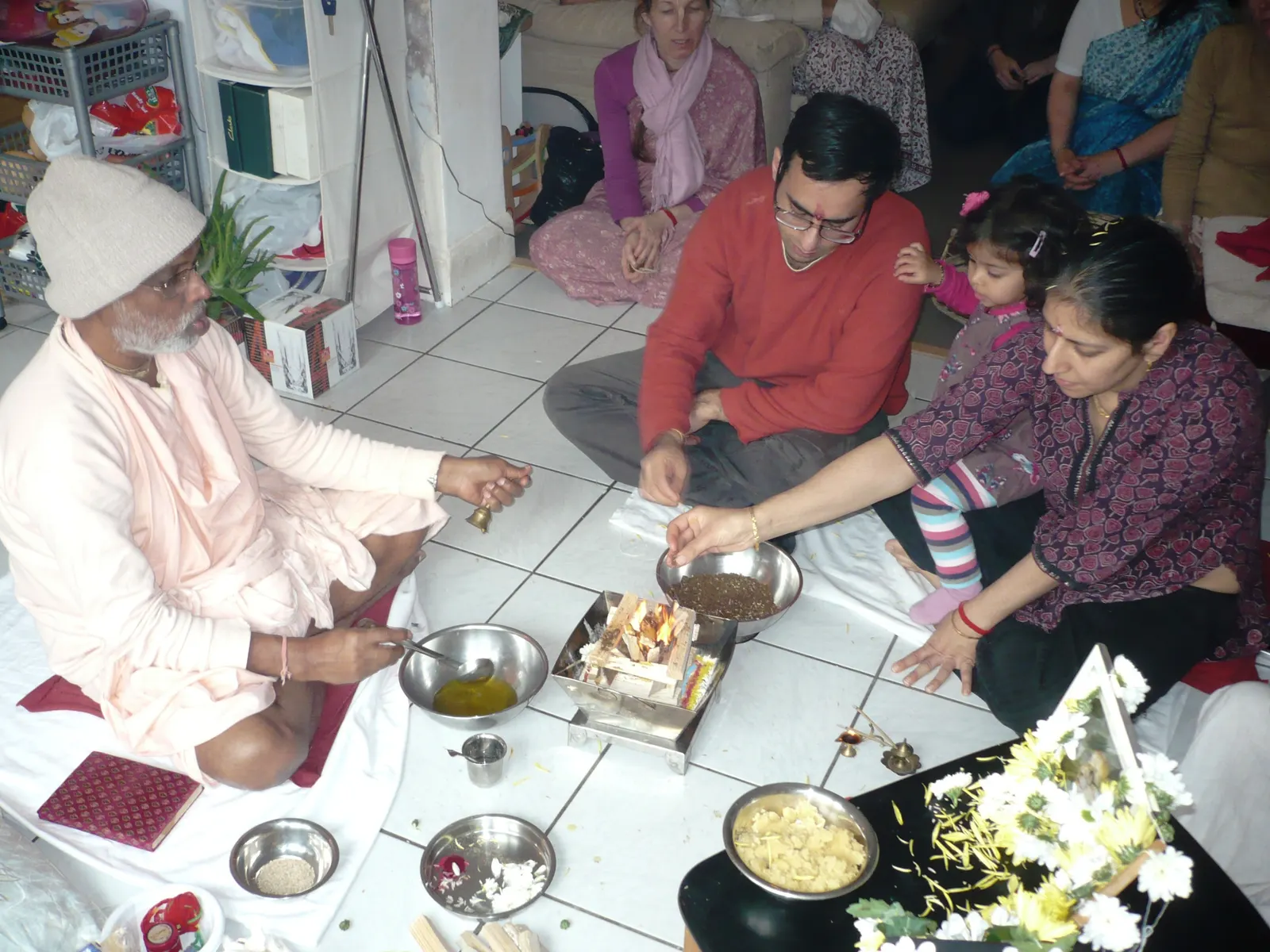
- Let a real pandit lead the big occasions. For a Griha Pravesh, a Satyanarayan Katha or a milestone, a live ceremony with a pandit chanting your family's name and gotra shows kids this is serious and ancient - not improvised from an app.
- Find community where you can. Programs such as Chinmaya Mission's Bala Vihar run weekend classes in many US cities, and even a monthly session gives kids friends who share their festivals.
How Do I Explain Hindu Rituals to My Kids Born Abroad?
Almost every parent ends up asking, "How do I explain Hindu rituals to my kids born abroad?" The children don't have the ambient cues that kids in India absorb without trying: shops decorated for Diwali, classmates fasting for Navratri, temple bells on the way to school. So the explanation has to be deliberate.
Keep it short and repeat it every time. "We do Satyanarayan puja to say thank you when something good happens" said once a year, every year, sticks better than one long lecture. Lead with stories rather than rules - Ganesha's elephant head, Hanuman's leap, Prahlad's faith. And connect rituals to things your kids care about: a small puja before a big exam or a first day at a new school makes the practice personal.
NRI ke Liye Pooja Seva, Delivered to a Living Room in LA
NRI ke liye pooja seva means "puja services for NRIs" - and it describes exactly the gap this family was living in. A DevPravas booking is a live ceremony performed by a real pandit in India, streamed to your home so your child watches their own family's name and gotra being chanted. Afterwards, an Aashirwad prasad box is shipped to your door with a 14-day delivery guarantee - something tangible for a child to hold once the screen goes dark. Our NRI hub and USA page explain how slots are timed for American evenings and weekends.
Hindu Traditions for Kids at Home: Small Rituals, Big Identity
You don't need to recreate a temple every week. Hindu traditions for kids at home work best when they're small and consistent:
- A diya lit every Friday evening, with the child striking the match (supervised).
- A short shloka before dinner - the Gayatri Mantra or a simple food prayer.
- A small puja corner that the child helps arrange and keep clean.
- Making prasad together, even something as simple as fruit or sheera, so they learn that blessed food is shared.
- A family video call to grandparents straight after any major puja, so kids see ritual linking generations and continents.
Weekends help too. Many families keep one longer ritual a month - a Satyanarayan Katha on Purnima, or an aarti followed by a family meal - and let the weekday rituals stay tiny. That balance keeps the practice sustainable for working parents without letting it fade.
Identity in children isn't built by one grand gesture. It's built from dozens of small, repeated ones that eventually feel like "just what we do."
FAQ: Raising Hindu Kids in the US
How do I start raising Hindu kids in the US without a temple nearby?
Start with rhythm rather than access: a weekly diya, a short shloka, festivals marked every year without fail, and a live pandit-led puja for the big occasions. It works best when home, not the temple, is the centre. Our NRI USA page explains how families schedule live pujas around American weekends.
How do I explain Hindu rituals to my kids born abroad?
Give one short, honest reason every time, lead with stories rather than rules, and link rituals to your child's own life - exams, birthdays, a new school. Kids abroad lack the cultural cues children in India absorb naturally, so repetition matters. Our post on second-generation kids and puja has more practical ideas.
At what age should kids start taking part in puja?
There's no real cutoff. Toddlers can hold a bell or watch a diya being lit, and the explanation simply deepens as they grow. By five or six many children enjoy a small job, such as offering flowers. A Satyanarayan Katha with English narration is an easy first ceremony for young kids.
Can an online puja replace a temple visit for kids?
Not every part of it - the crowd, the incense, meeting other families - but for the ritual itself, a live puja with a real pandit chanting your family's names gives children the same sense of occasion. Families book these through devpravas.in for exactly that reason. Read real puja vs recorded video to know what to look for.
What if my kids are embarrassed or uninterested?
It's common, especially around the tween years, and it's usually self-consciousness rather than rejection. Keep things low-pressure, offer small roles instead of demanding full participation, and stay consistent. Interest often returns in the teens or twenties. A yearly rhythm like the Festival Care Plan keeps rituals steady without constant negotiation.
Are there Hindu classes for kids in the US?
Yes. Many temples run Sunday schools, and organisations such as Chinmaya Mission offer Bala Vihar classes in cities across the US, covering stories, shlokas and values. They work well alongside home rituals, not instead of them. For festivals and milestones between classes, see how families arrange live pujas on our NRI page.
Related Reading
If Diwali is the festival you most want to get right with your kids, London Diwali Prep Starts Now has a countdown that works well beyond the UK. Browse every ceremony in our puja catalog.
Start With One Puja
You don't have to solve raising Hindu kids in the US all at once. Start with one puja, done properly, with your child watching and holding the bell. Message us on WhatsApp to talk through which ceremony fits your family right now, or book directly at book.html.
Share this article
Found this useful? Pass it on to a family member who is weighing the same question.