Real Temple Puja vs Recorded Video Puja: What to Check Before You Pay
By DevPravas Editorial Team · · 6 min read

A friend in Boston once forwarded a booking confirmation from a puja website with a single line: "Am I paying someone to press play on a YouTube video?" She wasn't being dramatic. The sample clip on the site was suspiciously smooth: perfect lighting, no ambient noise, and a priest whose gestures seemed rehearsed for the camera rather than offered to a deity. It's a fair question, wherever you live. Searching real temple puja vs recorded video puja puts you exactly where you should be: asking before you pay, not after. This guide explains the difference, gives you five practical checks, and addresses the question underneath it all: does an online puja even count?
Real temple puja vs recorded video puja: the core difference
A live puja happens in real time, in a real place, performed by a real officiant, and, crucially, it can respond to you. A recording can't. It was filmed once, edited, and plays back identically no matter who buys it or when.
That single difference, whether it can respond, is what every check below is really testing. In a thumbnail the two look the same. Once you start paying attention, they look completely different.
How to tell if a puja is live: five checks
1. Listen for your name and gotra in the sankalp. This is the strongest test you have. At the start of a puja, the pandit states who the ritual is for (names, gotra and intention) in the sankalp. A recording has no way to put your family's details into a fixed sequence. It either leaves them out or patches them in afterwards, which usually sounds wrong. With a genuine live stream, a coordinator can tell you roughly when to listen, and you'll hear your names in the same voice, in the same moment as everything else.
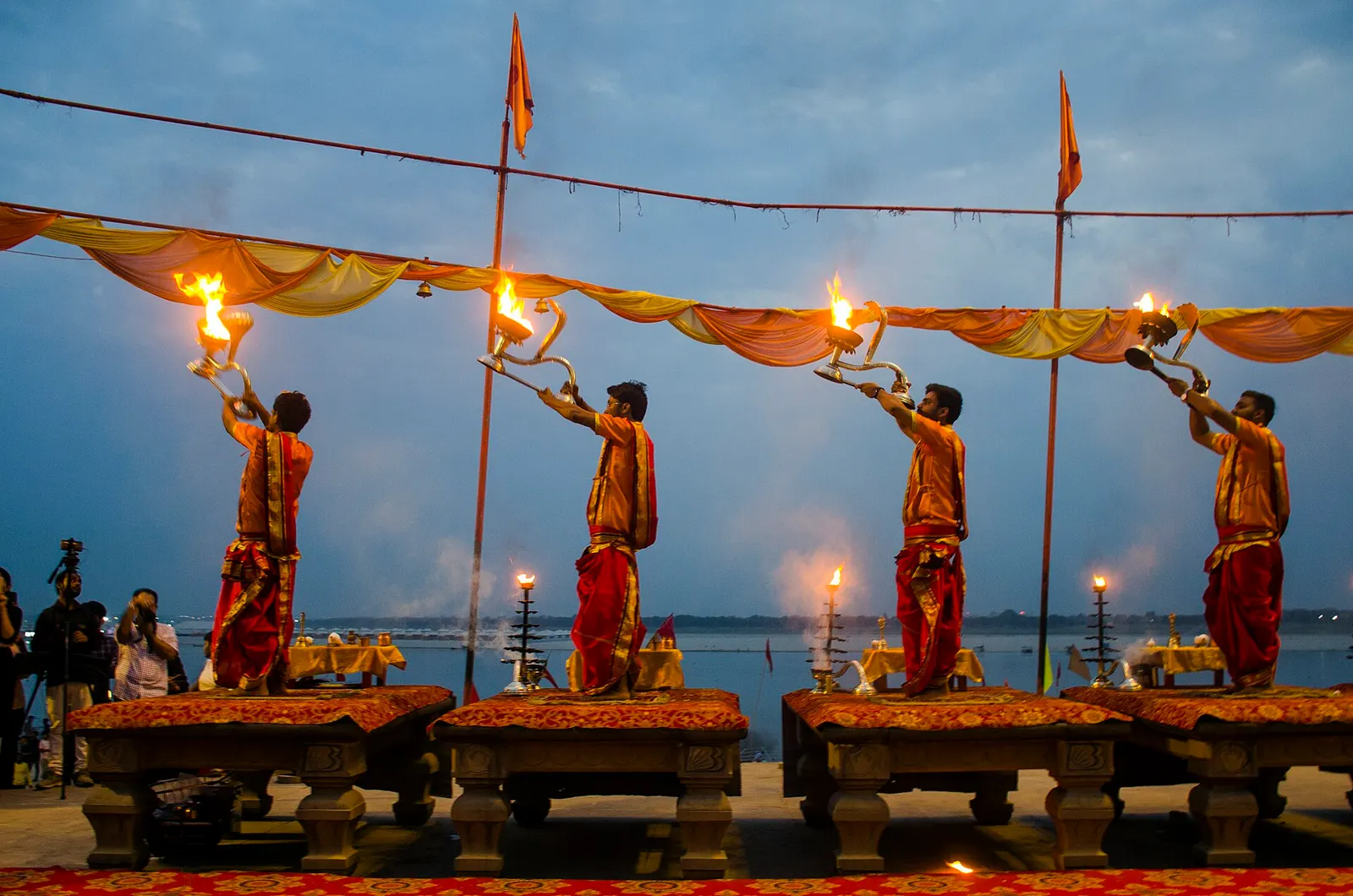
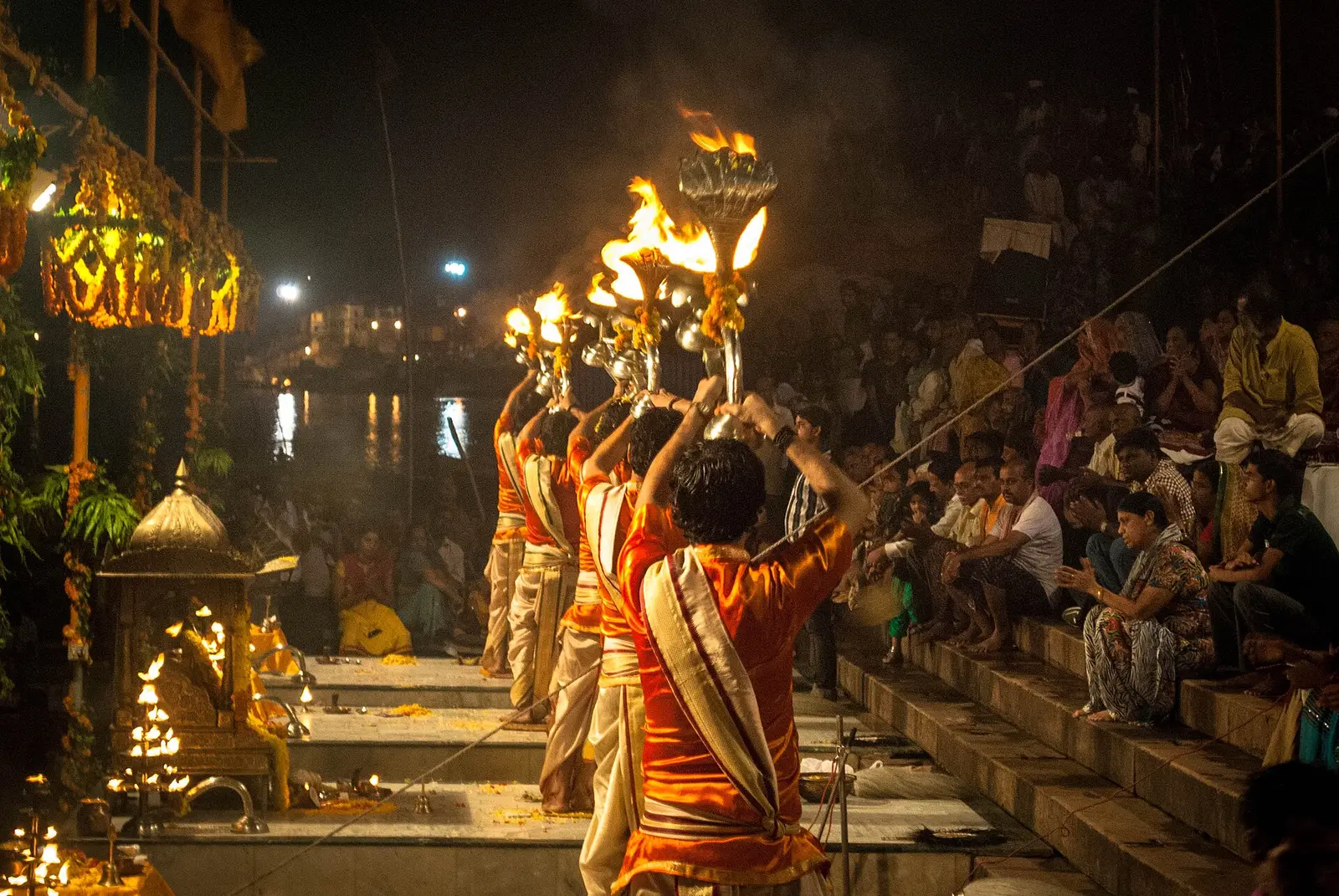
2. Notice the imperfections. Real ghats have real conditions: a bell from the next platform, wind bending a flame, a boat passing, the priest pausing to adjust the thali. Polished marketing footage has none of this. Slight roughness is reassuring, not a flaw.
3. Check whether the time slot belongs to you. A live ritual happens at a time you chose or confirmed, perhaps early morning in India and evening for you in the US. A recording doesn't need scheduling at all. If a site never asks what time works for you, notice that.
4. Read how the site uses the word "streaming." Some services use it loosely to mean "we'll send you a video." Ask plainly: Will this be streamed live at an agreed time, or will I receive a recording afterwards? An honest operation answers in one sentence.
5. Ask for a live link, and a guarantee behind it. If a service can't give you a link to watch in real time, you aren't getting a live ritual, whatever the copy says. Better still, look for a written remedy if the stream isn't live. DevPravas's 48-Hour Trust Guarantee, for instance, offers a free re-performance or a full refund if the video wasn't live, your name or gotra was misread, or the ghat wasn't visible on camera. Details are on our promise page.
What authentic Vedic puja live streaming looks like
Authentic Vedic puja live streaming isn't about camera quality. It comes down to a few simple things you can verify:
- A named place. DevPravas pujas are currently performed in Ujjain, near Mahakaleshwar temple on the Shipra ghats.
- A pandit performing the full vidhi, not a shortened version for the camera.
- Your sankalp read aloud, with names and gotra confirmed with you beforehand.
- A record afterwards, such as a same-day digital certificate naming the puja and the date.
You can see the pujas we offer this way on the pujas page. For a step-by-step explanation of the mechanism, read what live puja streaming actually means.
Is online puja as effective as in-person puja?
This is the question people really want answered, and it deserves an honest one. In Vedic practice, what makes a puja is the sankalp (the stated intention, with your name and gotra), the correct vidhi performed by a qualified pandit, and your own shraddha, or sincere faith. Many pandits and devotees hold that a live puja you take part in fulfils all three, even from far away. Being physically present is precious, and nothing here is meant to replace a temple visit when you can make one.
What a recording removes is presence. With a live ritual, you're there, in a real sense, at the moment the mantra is spoken and the offering is made. With a recording, you're watching something that already happened, and it was never really for you. For a Griha Pravesh, a milestone puja or a date-bound rite like Pitru Paksha Shraddha, that presence is the whole reason to do it remotely rather than skip it.
Puja from home, done properly
Many families search the Hinglish phrase ghar baithe puja kaise karayein, "how do I get a puja done from home?" Done properly, the answer isn't a substitute experience. It's the same real ritual, witnessed live, from wherever you happen to be. Sit facing the screen, keep a diya lit, and say your own names quietly along with the sankalp.
A note for readers in India, too
This isn't only a diaspora concern. A professional in Jaipur, Pune or Bengaluru who books a puja because they can't reach a hometown temple that week deserves the same real ritual, not a discounted recording dressed up as one. Whether you're in Boston or Jaipur, the standard should be the same. Families abroad can find time-zone help on our NRI page.
Frequently asked questions
How can I tell if an online puja is live or pre-recorded?
Ask for a live link at an agreed time, then listen for your own names and gotra during the sankalp. A recording can't include them naturally. Look for small unscripted moments, too, like wind, bells and the priest adjusting something. For a fuller checklist, see how to verify an online pandit is genuine.
Is an online puja as effective as being there in person?
Tradition places the weight on sankalp, correct vidhi and sincere faith rather than physical location, which is why many pandits accept a live puja you take part in as complete. It is different from a temple visit, and both have their place. Our guide to live puja streaming explains how participation works from home.
Can I ask the pandit to repeat a name during a live puja?
Within reason, yes. A coordinator can relay a simple request, such as repeating a name or pausing for a family member to join, and that's only possible because the ritual is happening live. Better still, confirm pronunciation before the day, which DevPravas coordinators do as standard. You can raise it when you book your puja.
Why do some online puja sites only send a video afterwards?
Sometimes it's honest, as in a photo-and-video service that says so upfront. Sometimes it hides that no dedicated ritual took place. That's the real temple puja vs recorded video puja question in a nutshell: the problem is a recording sold as if it were live. On devpravas.in, pujas are streamed live and backed by a written remedy if they aren't; see our promise.
Does a live puja cost more than a recorded one?
Often, yes, because a dedicated pandit, a scheduled slot in your time zone and a coordinator all take real effort. On DevPravas, each puja page lists its packages separately, with the live-stream option clearly marked. For example, Pind Daan is ₹4,700 for the basic package and ₹5,700 for live stream. Compare options on the pricing page.
See it live for yourself
The best way to settle any doubt about real temple puja vs recorded video puja is to watch a real one happen. Message us on WhatsApp with your questions before you commit, browse the pujas page, or go straight to book your puja when you're ready.
Share this article
Found this useful? Pass it on to a family member who is weighing the same question.