Teaching Kids About Hindu Rituals: Making Puja Feel Relevant for the Second Generation
By DevPravas Editorial Team · · 6 min read
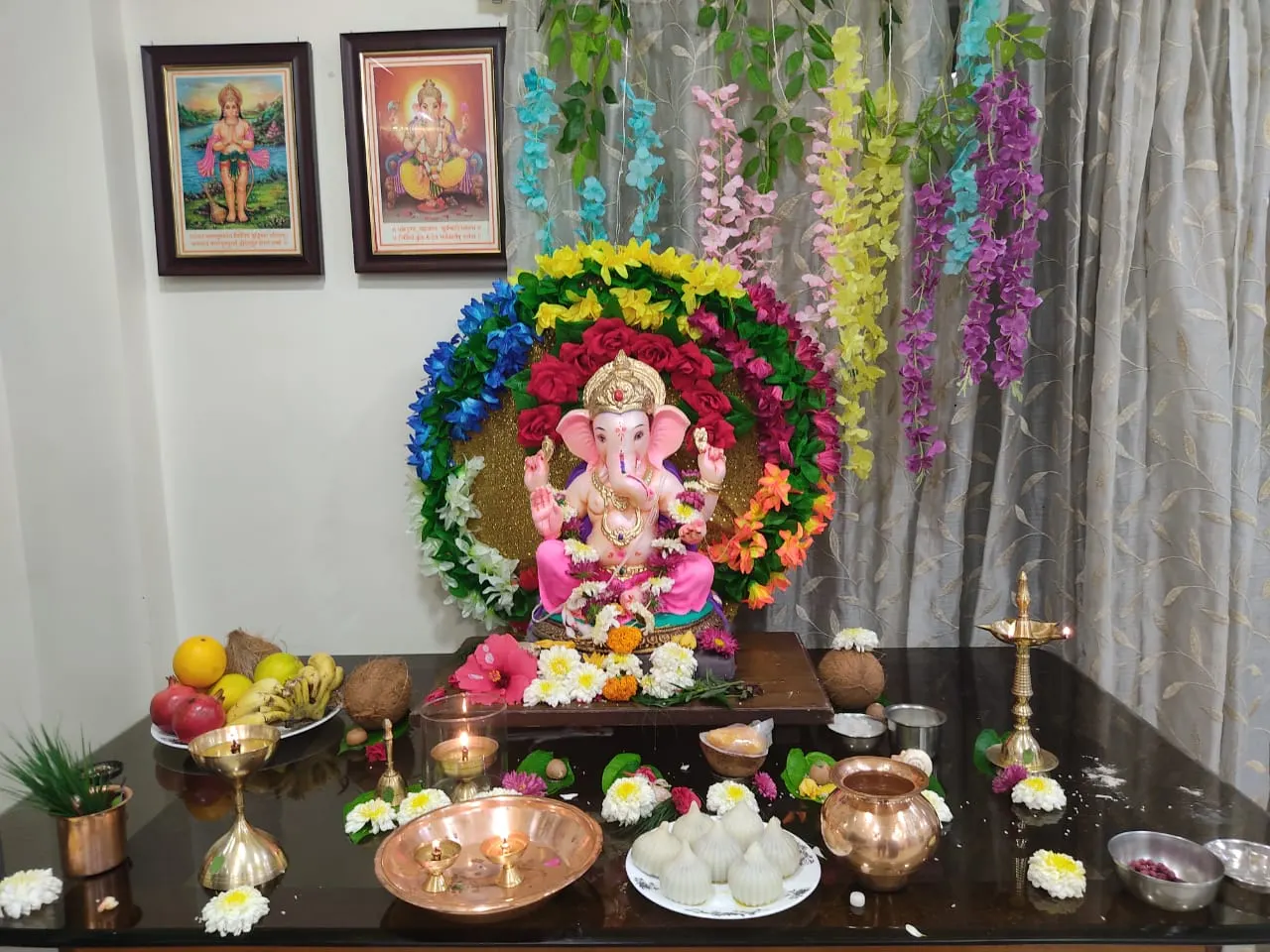
On a Sunday evening in Delhi NCR, a grandmother was on a video call with her granddaughter in Wembley, both watching the same live stream of a Ganpati Sthapana. The grandmother kept narrating - "dekho, ab modak chadha rahe hain", look, now they're offering the modak - while the ten-year-old asked, entirely without malice, "Nani, why does he like modak so much?" It's a fair question. It's also the kind of question that decides whether a ritual survives into the next generation or quietly becomes background noise. Teaching kids about Hindu rituals starts with taking questions like that seriously.
This isn't only an NRI story. Children in Pune or Bengaluru today are just as likely to watch a puja half-distracted by a tablet, without anyone explaining what it means. The gap isn't geography. It's explanation.
Why "Because We've Always Done This" Doesn't Land Anymore
Every generation of parents has said some version of "we do this because our parents did." It worked when a child's whole world reinforced the same rituals - school, neighbours, festivals in the street. That reinforcement has thinned for many families, in India and abroad, because childhood is now more individual, more digital and more scheduled. A ritual that isn't explained tends to register as an obligation rather than a meaning, and kids are remarkably good at telling "this matters" from "we're just doing this."
The answer isn't to make ritual so casual it loses its seriousness. It's to pair every ritual with a reason a child can hold onto.
Second-Generation NRI Kids and Puja Traditions
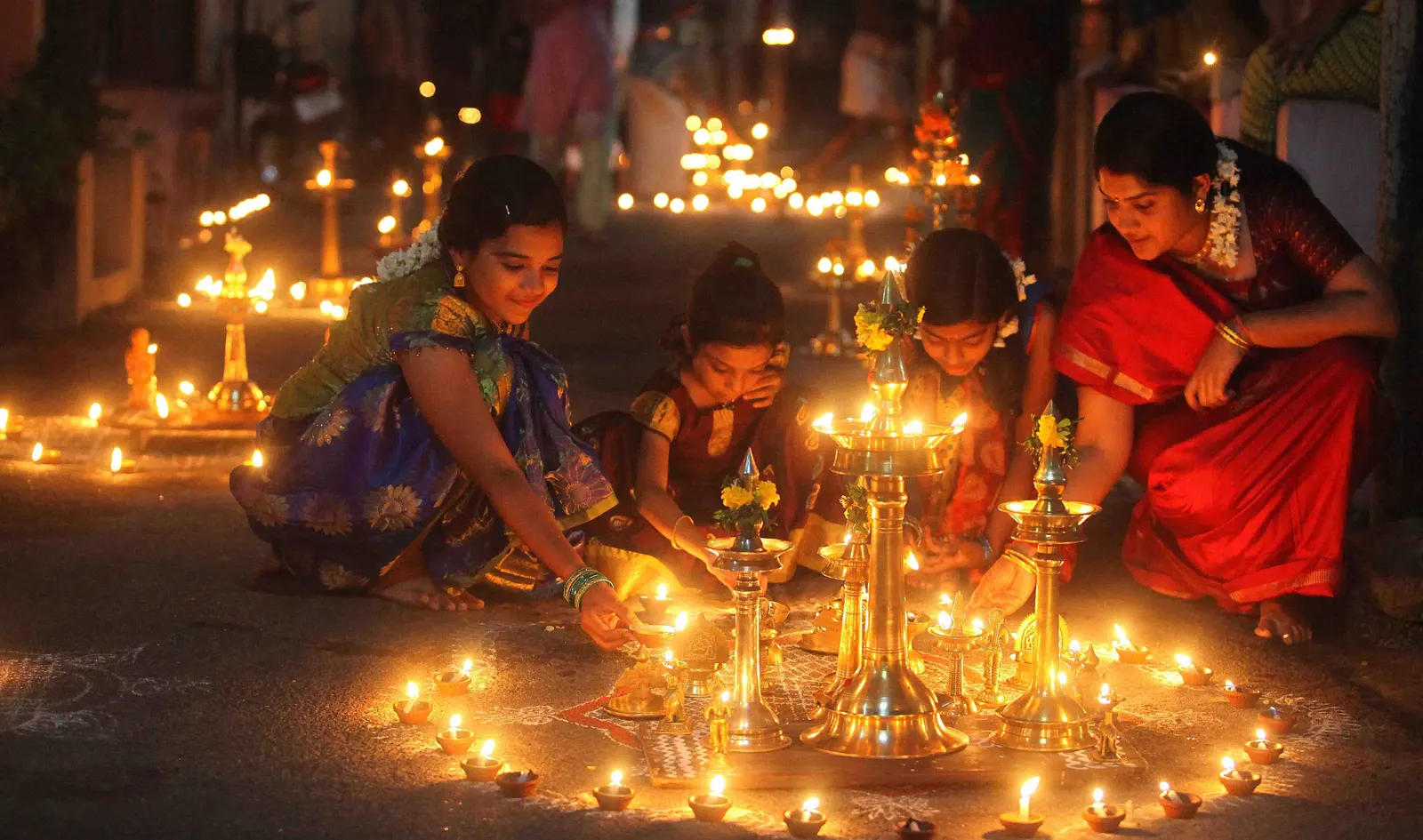
Second-generation NRI kids and puja traditions have a particular relationship. These children often love the food, the clothes and the lights, but feel unsure about the "why". A child in Singapore may see Deepavali lights along Serangoon Road yet still not know who Lakshmi is. A teenager in Wembley may be proud of Diwali at school but embarrassed to be asked to explain a havan.
What helps is making them insiders rather than audience. Children who understand even one ritual well - why the coconut is broken, why the diya faces a particular way - tend to carry that pride into the rest.
How to Make Puja Interesting for Kids
Parents asking how to make puja interesting for kids usually find that the answer is participation, story and relevance:
- Answer the "why" in one sentence. "Ganpati is worshipped first because he removes obstacles before anything new begins" is enough. Kids don't need theology; they need a hook.
- Let the story teach, not the rule. Children remember how Ganesha got his elephant head far more easily than a list of dos and don'ts. Satyanarayan Katha, Kaal Bhairav guarding Kashi, Prahlad and Holika - these stick because they're stories.
- Give them a job. Ringing the bell, holding the thali, placing a flower, pouring water for the abhishek.
- Use the senses. Let younger children touch and name the items on the puja thali, smell the incense, taste the prasad they helped make.
- Connect ritual to their lives. A small puja before exams, a first day of school or a sports final makes it personal.
- Don't cram. Explaining all of Diwali in one sitting overwhelms. Spread meaning across the year - a little at Navratri, a little more at Diwali, more again next year.
Pravasi Bhartiya Puja Booking: Keeping Grandparents in the Circle
For families abroad, pravasi bhartiya puja booking - booking pujas for Indians living outside India - is often less about convenience than about keeping grandparents involved. When a puja is performed live and the whole family joins, Nani in Delhi can narrate while the child in Wembley watches, and the story passes down in real time, just as it would have in one living room.
A Simple Ritual Year for Kids
Spreading meaning across the calendar is easier than it sounds. Each festival brings one story and one hands-on task:
- Ganesh Chaturthi: the story of Ganesha's elephant head; the child helps shape or decorate modak.
- Navratri: the nine forms of Devi; a night of garba, even in the living room.
- Diwali: Ram's return to Ayodhya and welcoming Lakshmi; the child lights the first diya and helps draw the rangoli.
- Makar Sankranti or Pongal: harvest and gratitude; kites, til-gul or a pot of pongal.
- Holi: Prahlad's faith and Holika; colours the next day.
- Their own birthday: a short aarti and a blessing from grandparents on video.
In Singapore, where Deepavali is a public holiday, children see festival lights all around them - but even there, the story only lands if someone at home tells it. A calendar like this gives every family, wherever they live, a steady rhythm to hang the stories on.
When a Real Ceremony Does More Than Any Explanation
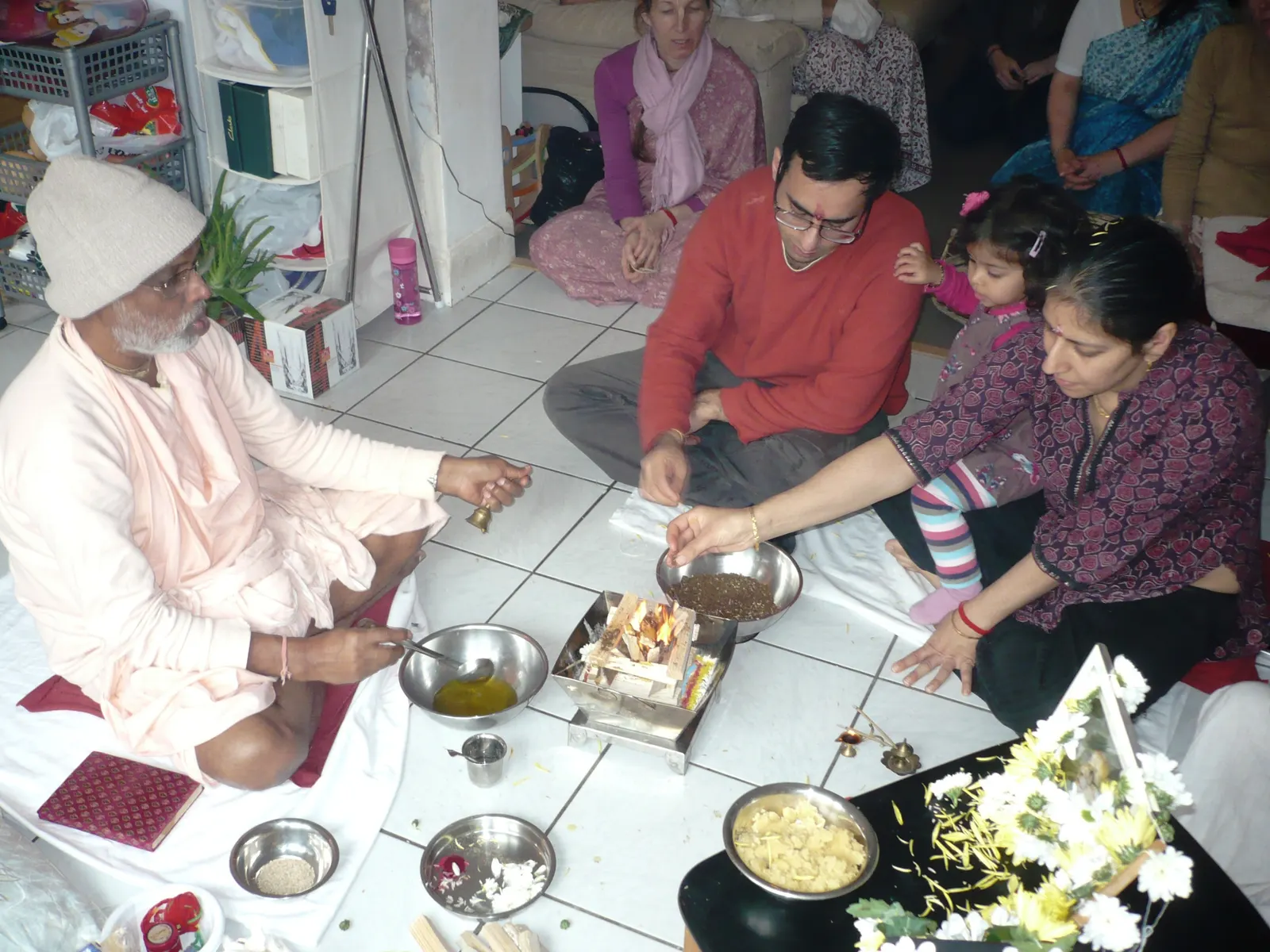
There's a limit to what explanation alone can teach. At some point a child needs to watch a ritual performed properly - the fire lit, the mantras chanted with care, a pandit taking the ceremony seriously - to understand that this isn't a story adults made up. It's something people have practised for a very long time.
For families who can't easily reach a temple, whether because of Bengaluru traffic or thousands of miles, a live puja online with family fills that gap. The child hears their own name and gotra in the sankalp, sees the fire and gets a small role at home - lighting a diya in sync with the pandit, or ringing the bell during aarti. A Ganpati Sthapana or a Satyanarayan Katha with English narration are good first choices for young children. Families outside India can see how scheduling works on our NRI page.
FAQ: Teaching Kids About Hindu Rituals
How do I start teaching kids about Hindu rituals?
Start small and consistent: one ritual at a time, one short reason each time, and a job for the child to do. Stories and participation work far better than lectures. If you live abroad, Raising Hindu Kids in the US Without a Temple covers the extra challenges families face.
How can I make puja interesting for kids?
Give them a role, tell the story behind the ritual, let them handle the thali items and help make prasad, and link the puja to something in their life. Festivals with strong stories and colourful rituals, like Ganpati Sthapana, are especially engaging for younger children.
At what age should I explain the meaning behind rituals?
As soon as a child starts asking "why" - usually around four or five - give simple, honest answers, and let the depth grow with them. There's no single right age. Planning explanations around the festival year helps; our 2026 Hindu festival calendar is a useful map for spacing them out.
My child gets bored during long pujas. Is that a problem?
Not really. Long ceremonies test anyone's attention. Give a small task, allow short breaks and don't insist on perfect stillness - participation matters more than behaviour. Shorter rituals, such as a simple aarti, are a gentler start. Browse our puja catalog for ceremonies that suit your family's pace.
Can grandparents in India join a live puja with the kids abroad?
Yes. A live puja online with family lets grandparents in India and grandchildren in the UK, US or Singapore watch the same ceremony at the same moment, with the family's names in the sankalp. Many families book these through devpravas.in so elders can narrate as it happens. Our NRI page explains how.
Should rituals be explained differently to kids growing up outside India?
The meaning doesn't change, but the explanation often needs to be more explicit, because kids abroad miss the everyday cues - decorated shops, classmates celebrating - that children in India absorb naturally. Tying rituals to local life helps. Our UK page shows how families there time pujas around school weeks.
Related Reading
If Ganpati Sthapana is the ceremony your family is building toward, Ganpati Sthapana and Navratri: How Maharashtra's Festivals Connect tells the story behind it.
Book a Puja Your Kids Can Actually Watch
The best way of teaching kids about Hindu rituals is to let them see one happen live, with a real pandit and a real fire, and a job of their own to do. Message us on WhatsApp to plan your next family puja, or book directly at book.html.
Share this article
Found this useful? Pass it on to a family member who is weighing the same question.