Ganpati Sthapana Puja Guide: How Maharashtra's Ganeshotsav and Navratri Connect
By DevPravas Editorial Team · · 7 min read
Ask a household in Pune when festival season starts and you will rarely get a single date. It starts when Ganpati Bappa arrives in Bhadrapada, and it does not really end until Vijayadashami closes Navratri several weeks later. Two festivals, two deities, two very different moods: one loud and communal, with dhol-tasha in the lanes, and one inward, lasting nine nights. This Ganpati Sthapana puja guide explains how to install Ganesh properly, why the order matters, and how the two festivals fit into one devotional season.
The question comes up often, from families in Maharashtra and from Marathi households settled abroad: what actually connects Ganpati Sthapana to Navratri, and does the sequence matter if you want to observe both correctly? The short answer is that it does. The longer answer starts with Ganesh himself.
Maharashtra Festivals: Ganeshotsav and Navratri as One Season
Ganesh is invoked at the start of almost any significant undertaking, including other pujas, because he is Vighnaharta, the remover of obstacles. You honour him before you ask any other deity for anything. Ganeshotsav is a festival-length version of that principle. Before the intensity of Devi worship in Navratri, the household first clears the path.
There is also a seasonal logic. Ganesh Chaturthi falls in Bhadrapada, usually between late August and mid-September, and Sharad Navratri follows in Ashwin, which in 2026 means Ghatasthapana on Sunday, October 11 and Vijayadashami on Tuesday, October 20. Both months are tied to harvest, transition and household renewal across western India. A family that installs Ganpati with real devotion tends to carry the same discipline into Navratri: the daily aarti, fresh flowers, attention to the home shrine.
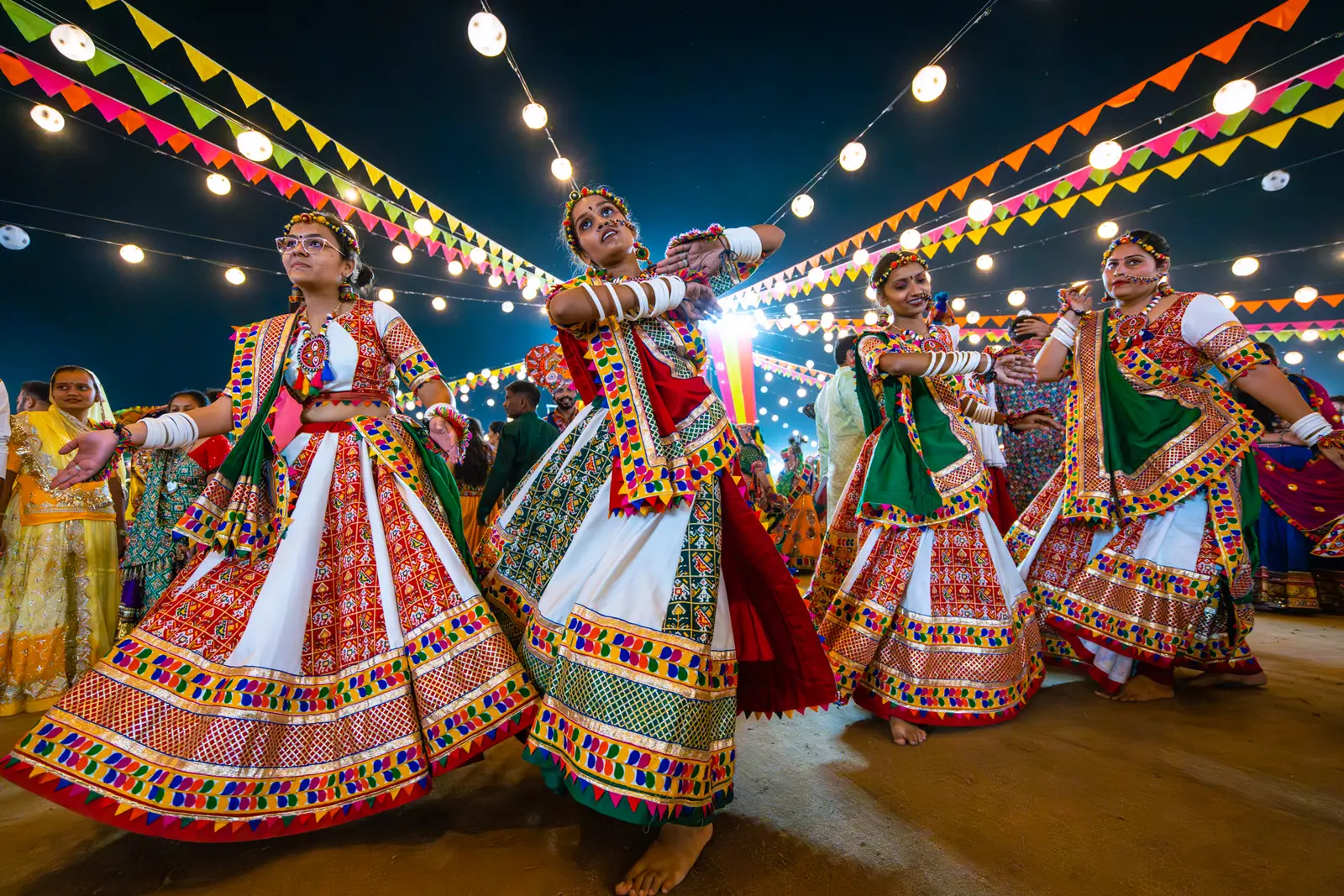
In Mumbai the connection is easy to see in the streets. The same neighbourhood mandals that build Ganesh pandals often host garba or Devi celebrations a few weeks later, and the same families show up to both.
Ganpati Sthapana Vidhi, Step by Step
Family customs vary, but the core sequence of the Ganpati Sthapana vidhi followed in most Maharashtrian homes is consistent:
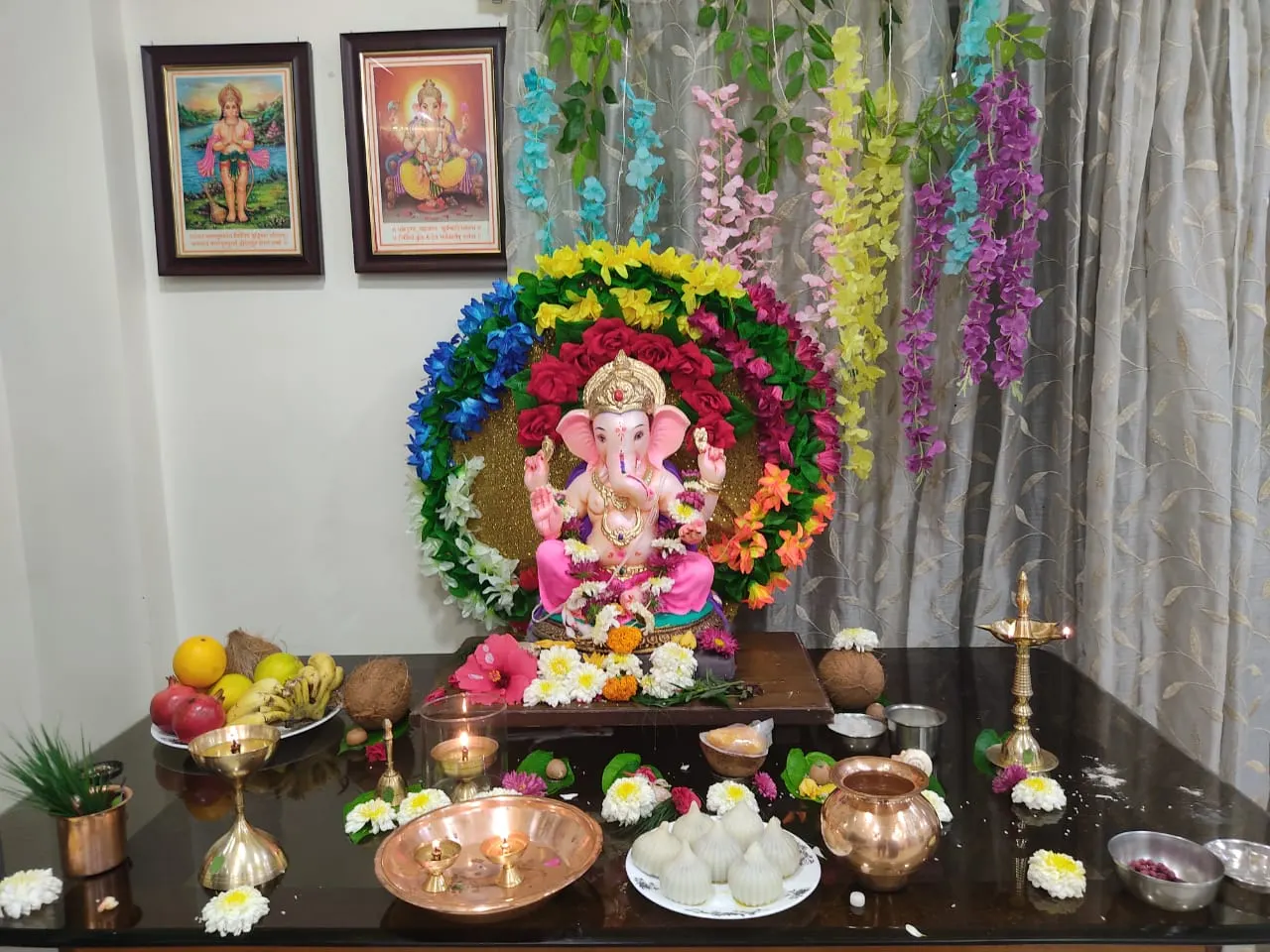
- Prepare the space. Clean the area and set up a chowki (low platform) covered with a red or yellow cloth. Many families place the idol facing east or north, or in the north-east of the room.
- Set the kalash. Fill a kalash with water and cover it with mango or betel leaves and a coconut. It sits beside the idol.
- Sankalp. The person performing the puja states their name, gotra, the place and the intention. This makes the puja formally the family's own.
- Pran pratishtha. Mantras invite the deity's presence into the murti. This is the heart of the sthapana, and the step where families most often want a priest's guidance.
- Shodashopachara puja. The sixteen offerings, including water, sandalwood, red flowers, durva grass, incense, a lamp and naivedya, traditionally modak.
- First aarti. "Sukhakarta Dukhaharta" is sung and the family takes darshan together.
- Daily worship and visarjan. Morning and evening aarti continue for the number of days your family observes, followed by an uttar puja and immersion on the final day.
The vidhi itself does not change with the length of the observance. A one-and-a-half-day sthapana follows the same installation steps as a ten-day one ending on Anant Chaturdashi.
परदेशात गणपती स्थापना (Ganpati Sthapana Abroad)
Marathi families living abroad use the phrase परदेशात गणपती स्थापना, meaning Ganpati Sthapana in a foreign land. It captures something real. A festival built around a physical idol, a river immersion and a neighbourhood full of pandals is harder to recreate from an apartment in another country. Many families adapt: a small clay murti on a clean shelf, visarjan in a large vessel or bucket at home, and the dissolved clay returned to a garden or potted plant. The devotion stays the same, and only the scale changes.
Ganpati Sthapana Online: When a Guided Puja Helps
Plenty of families do the sthapana themselves, especially if a parent or grandparent learned the mantras by heart. A guided puja helps most when it is your first time hosting, when no elder is around to lead, or when you want the pran pratishtha mantras chanted fully rather than approximated.
DevPravas offers a Ganpati Sthapana Puja with Pune-based priests who guide the ritual live over video in Marathi, Hindi or English. The session takes about 35–45 minutes. You choose a 1.5, 5 or 10-day sthapana, and after booking you receive a checklist so you can source the idol, mandap, flowers and durva locally. The priest then guides the pran pratishtha while you perform the actions, takes the sankalp in your family's name and gotra, leads the first aarti, and shares guidance for the daily aarti and the visarjan. A printable vidhi sheet and an optional modak and samagri kit are included. It works the same way for a flat in Pune or a townhouse in New Jersey, and the full catalogue is on our pujas page.
A Ganpati Sthapana Puja Guide to Doing Both Festivals Properly
Families who observe the full stretch usually sequence it like this:
- Ganpati Sthapana: Install the idol with a proper invocation, keep the number of days your family follows (1.5, 3, 5, 7 or 10), and perform visarjan with the same care as the installation.
- The weeks between: For many families this is also Pitru Paksha, which in 2026 runs from September 27 to October 10. The shrine stays simple but tended, and ancestral rites take priority.
- Navratri: Ghatasthapana on day one, a daily aarti to the nine forms of Devi, and a proper puja on Ashtami, Navami and Vijayadashami.
Where the Two Festivals Diverge
It is worth being clear about where the connection ends. Ganpati Sthapana centres on a single deity, installed and worshipped intensely for a fixed, short window, then ceremonially released to the water. It is concentrated devotion: loud, joyful and finite by design, with visarjan built in from day one.
Navratri runs on a different rhythm. It honours nine forms of Devi, each tied to a day and a quality (courage, wisdom, prosperity, protection), worshipped in sequence. The kalash stays, the worship deepens day by day, and the festival builds toward Ashtami and Navami before resolving on Vijayadashami. Ganpati is a burst, and Navratri is a build. Together they cover two very different disciplines of worship inside a single autumn: letting go with devotion, and sustaining attention over nine days.
FAQ: Ganpati Sthapana and Navratri
Can I do Ganpati Sthapana at home without a pandit?
Yes. Many families do a simple home sthapana themselves, especially for a 1.5-day observance. A guided session is worth it if it is your first time, the idol is large, or you want the pran pratishtha mantras chanted correctly rather than from memory. The Ganpati Sthapana Puja page shows how a priest guides you live over video.
How many days should Ganpati be kept at home?
It depends on family tradition. Common durations are 1.5, 3, 5, 7 or 10 days, with the ten-day observance ending on Anant Chaturdashi. The installation steps are the same whatever the length. On devpravas.in you can choose a 1.5, 5 or 10-day guided sthapana, and our pujas page lists related rituals such as Ganesh Yagya.
Which direction should the Ganpati idol face?
Most traditions place the idol facing east or north, or in the north-east of the room, and avoid the south-facing directions. What matters more is a clean, stable spot where the family can gather for aarti each day. This Ganpati Sthapana puja guide keeps to widely followed customs, and a priest booked through book.html can advise on your family's own practice.
How do you do Ganpati visarjan if you live abroad?
Where river immersion is not possible, families perform the uttar puja and then immerse a clay murti in a large vessel or bucket of water at home. Once it dissolves, the clay and water go into a garden or potted plant. Our NRI page explains how families abroad arrange guided rituals like this around their own time zone.
Can Ganpati Sthapana be done during Navratri?
The traditional Ganpati Sthapana belongs to Ganesh Chaturthi in Bhadrapada, not to Navratri. Ganesh is, however, worshipped first at the start of the Navratri Ghatasthapana itself, as he is before any puja. If you missed Ganeshotsav, a Ganesh Yagya before a new beginning is one option to ask a priest about.
Related Reading
If you are balancing a similar dual season alongside a community celebration, Garba Nights and Ghar Ki Puja covers how families handle the devotional and social sides of Navratri. For the nine-day breakdown, see Sharad Navratri 2026: Dates, Nine Days, Nine Devis Explained, and for every major date this season, our Hindu festival calendar. To help children feel connected to festivals like these rather than just attending them, read Second-Generation Kids and Puja. Families abroad can find time-zone-friendly booking details on our NRI page.
Book Your Sthapana or Navratri Puja
Whether you are in Pune, Mumbai or a long way from Maharashtra, this Ganpati Sthapana puja guide comes down to one idea: clear the path first, then invite the goddess in. If you want a priest to guide your next sthapana or a Navratri puja, message us on WhatsApp and we will help you plan the dates, or go straight to book.html to check availability.
Share this article
Found this useful? Pass it on to a family member who is weighing the same question.