Naraka Chaturdashi 2026: How South India Celebrates Deepavali with the Pre-Dawn Oil Bath
By DevPravas Editorial Team · · 5 min read
In much of North India, the big Diwali moment is the evening - lamps, Lakshmi, fireworks. In a Tamil home, Deepavali often begins before sunrise. An elder wakes the household in the dark, warm sesame oil is rubbed on everyone's head, and the first question of the day is whether you have had your Ganga snanam yet. This is Naraka Chaturdashi, the day South India treats as the heart of Deepavali, and here is how it works for 2026.
Customs differ by state, community and household, so treat this as a general guide and follow your own family's tradition.
Naraka Chaturdashi 2026 Date and Abhyanga Snan Muhurat
Naraka Chaturdashi falls on the fourteenth lunar day (Chaturdashi) before Diwali's new-moon night. For 2026 the picture depends on the panchang and the place:
- Drik Panchang's New Delhi calendar places the Abhyanga Snan - the ritual oil bath - at about 5:41 AM to 6:38 AM on Sunday, 8 November, with Chaturdashi beginning at 10:47 AM on 7 November. A similar window of roughly 5:20 AM to 6:41 AM is listed by other sites.
- Choti Diwali is widely marked on Saturday, 7 November, and many diaspora calendars list that date for the UK and USA.
The bath must happen before sunrise, so the exact time shifts by city. These timings are for New Delhi, so for Chennai, Bengaluru or Hyderabad check a local panchangam. See Diwali 2026: The Five Days, Explained for how this day fits into the festival.
The Story of Narakasura
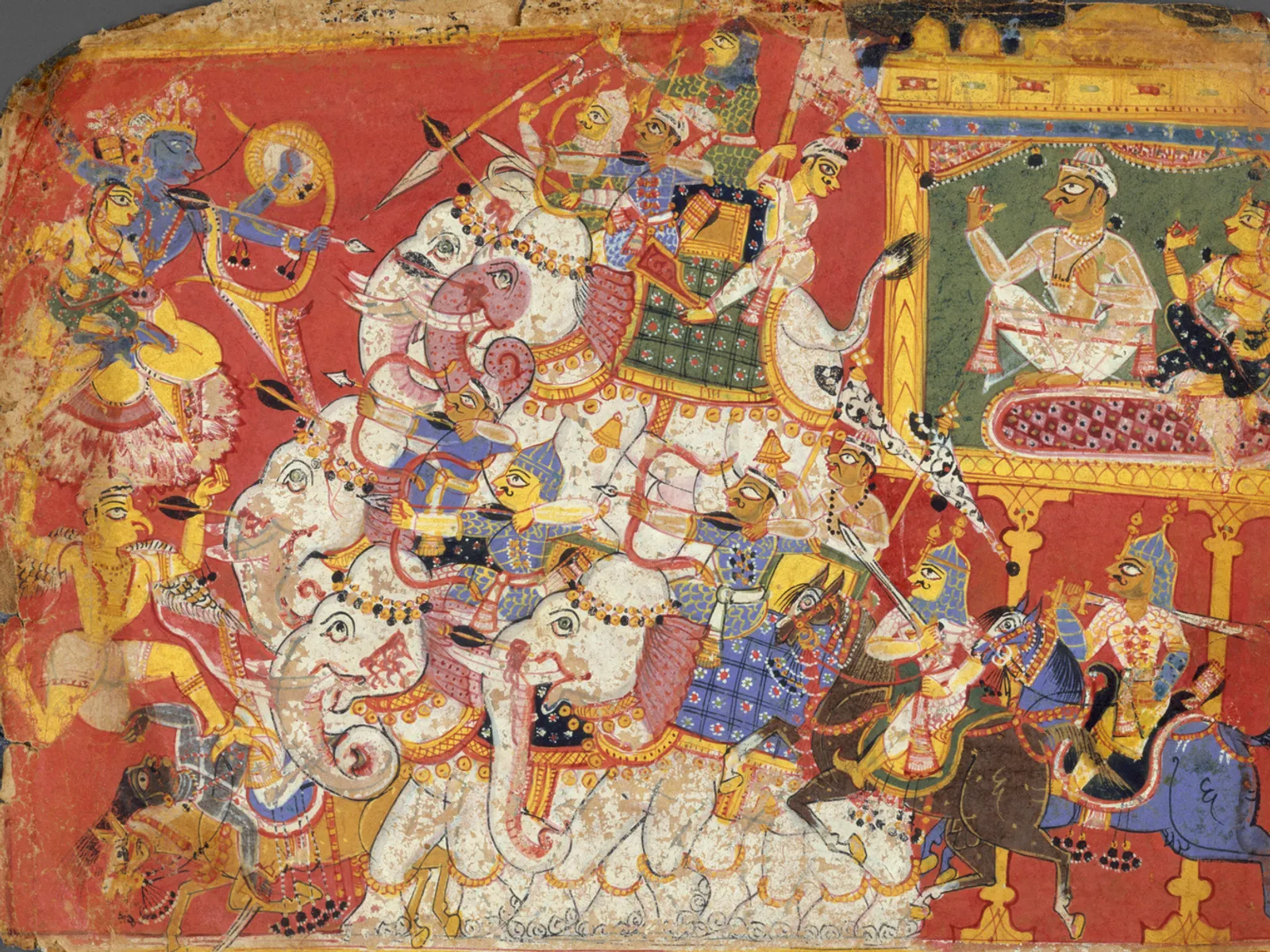
Narakasura, the demon king of Pragjyotishpura, terrorised the heavens and the earth and held thousands of captives. Krishna, with his wife Satyabhama, defeated him. According to the tradition, Narakasura, at the moment of death, asked that his end be remembered with lights and celebration rather than mourning, and that is why the day is marked with lamps and festivity. In many South Indian retellings Satyabhama's role is central. It is the victory of light over darkness in its most literal form, which is why many in the south regard this day, not the Amavasya evening, as the real Deepavali.
The Pre-Dawn Oil Bath (Ganga Snanam)
The ritual centrepiece is the oil bath:
- Wake in the dark, before sunrise, often at around 4 AM.
- Warm sesame (til) oil is applied by an elder to the head and body, usually with a small blessing.
- Wait briefly, then bathe with warm water, often scented with herbs or soapnut. The bath is said to carry the sanctity of the Ganga, hence the name Ganga Snanam.
- Put on new clothes and light a lamp before the household altar.
- Share sweets and the morning's festive breakfast.
In Tamil households, Deepavali marundhu (also called Deepavali legiyam), a spiced herbal preparation, is eaten to help digestion before the heavy festival food.
How the South Celebrates
- Tamil Nadu: Deepavali itself is observed on this day. New clothes, a family puja, firecrackers at dawn and sweets such as adhirasam and murukku mark the day. Many families visit the temple, then spend the day with relatives.
- Karnataka: The day before is Neeru Tumbuva Habba, when the household's water pots are cleaned, decorated and filled. On Naraka Chaturdashi itself, families bathe early and two days later celebrate Bali Padyami, honouring King Bali, the day after Lakshmi Puja.
- Andhra Pradesh and Telangana: Families perform the oil bath, tell the Narakasura story and light rows of lamps. Lakshmi Puja follows on the Amavasya evening.
- Goa and the Konkan coast: Huge effigies of Narakasura are burnt at dawn, often accompanied by firecrackers and youth competitions.
- Maharashtra: The same day is Abhyang Snan, with scented oil, ubtan (a herbal paste) and a festive breakfast of faral.
Doing It Abroad
The oil bath is easy to keep alive anywhere: warm sesame oil, a clean towel and an early alarm. The only real challenge is waking before local sunrise, which on 8 November falls late in the UK and North America. Choose the day and time that matches your local panchang, and, if you are working, simply start earlier. Families who cannot manage the full morning routine often keep the lamp and the new clothes and join a live puja later in the day. Our Lakshmi Puja Vidhi at Home guide covers the evening.
FAQ: Naraka Chaturdashi 2026
When is Naraka Chaturdashi 2026?
Choti Diwali is widely marked on Saturday, 7 November, while Drik Panchang's New Delhi calendar places the pre-dawn Abhyanga Snan at about 5:41 to 6:38 AM on Sunday, 8 November. Check a local panchang for your city.
What is Ganga Snanam on Deepavali?
It is the pre-dawn oil bath on Naraka Chaturdashi, believed to carry the sanctity of a bath in the Ganga. It is a central ritual in Tamil Nadu and other southern states.
Is Deepavali different from Diwali in South India?
Both are the same festival, but in Tamil Nadu Deepavali is celebrated on Naraka Chaturdashi, the day before the Amavasya Lakshmi Puja that dominates in the north.
Why do we celebrate Naraka Chaturdashi?
It commemorates Krishna and Satyabhama's victory over the demon Narakasura. The day is celebrated with lamps and festivity in line with the tradition that the demon asked for his end to be marked with celebration.
Can I do the oil bath abroad?
Yes. Use warm sesame oil, bathe before local sunrise on the date your local panchang gives, and wear new clothes. Families abroad keep this simple and personal.
Related Reading
For the main night, see Diwali 2026 Date and Muhurat. Families planning from abroad will find Your 30-Day Diwali 2026 Planning Guide for NRIs helpful, and our Hindu Festival Calendar 2026 shows the year ahead.
Book Your Diwali Puja
Whether your Deepavali starts with warm oil at 4 AM in Chennai or a quiet lamp in a flat abroad, the day is about ending darkness and starting fresh. Our Dhanteras Puja and Laxmi Puja can be joined live by video call. Message us on WhatsApp to confirm your city's timing, or book directly at book.html.
Share this article
Found this useful? Pass it on to a family member who is weighing the same question.