Chadhava Puja Meaning: The Smallest Offering With the Biggest Heart
By DevPravas Editorial Team · · 7 min read
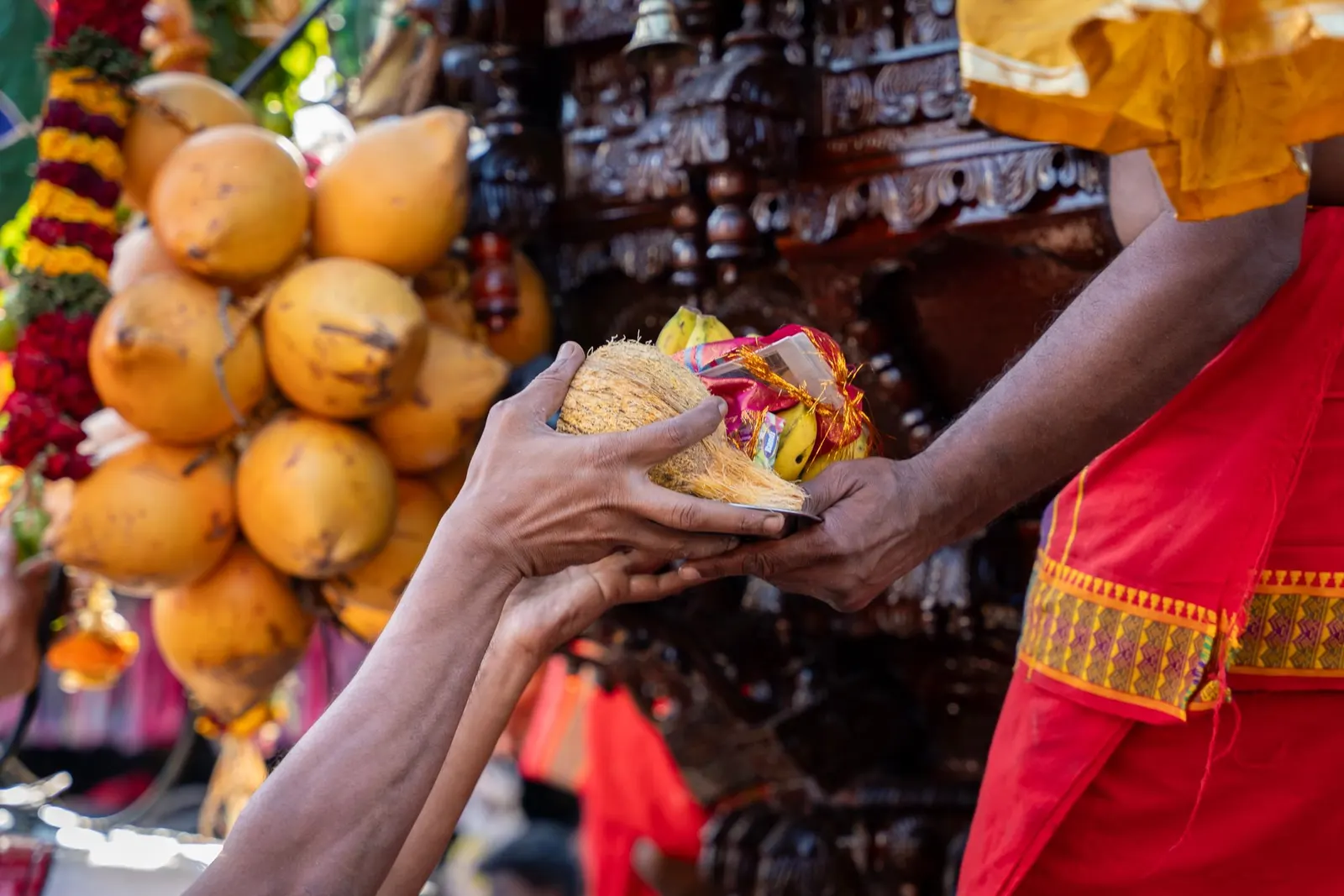
A woman in Kolkata stands in the lane outside Kalighat at 7 AM with a small plate in her hands: a red hibiscus garland, a length of red cloth, a few sweets, a coin pressed into the folds. She isn't here for a two-hour havan. She has fifteen minutes before she needs to catch the metro to work. She hands the plate to the priest, says her son's name under her breath, and watches it placed before the Devi. Fifteen minutes, and she walks out lighter.
That plate has a name: Chadhava. Understanding the Chadhava puja meaning starts here, with one of the oldest, most ordinary and most misunderstood forms of Hindu worship. It deserves better than being treated as a footnote to "real" puja.
Chadhava Puja Meaning: Where the Word Comes From
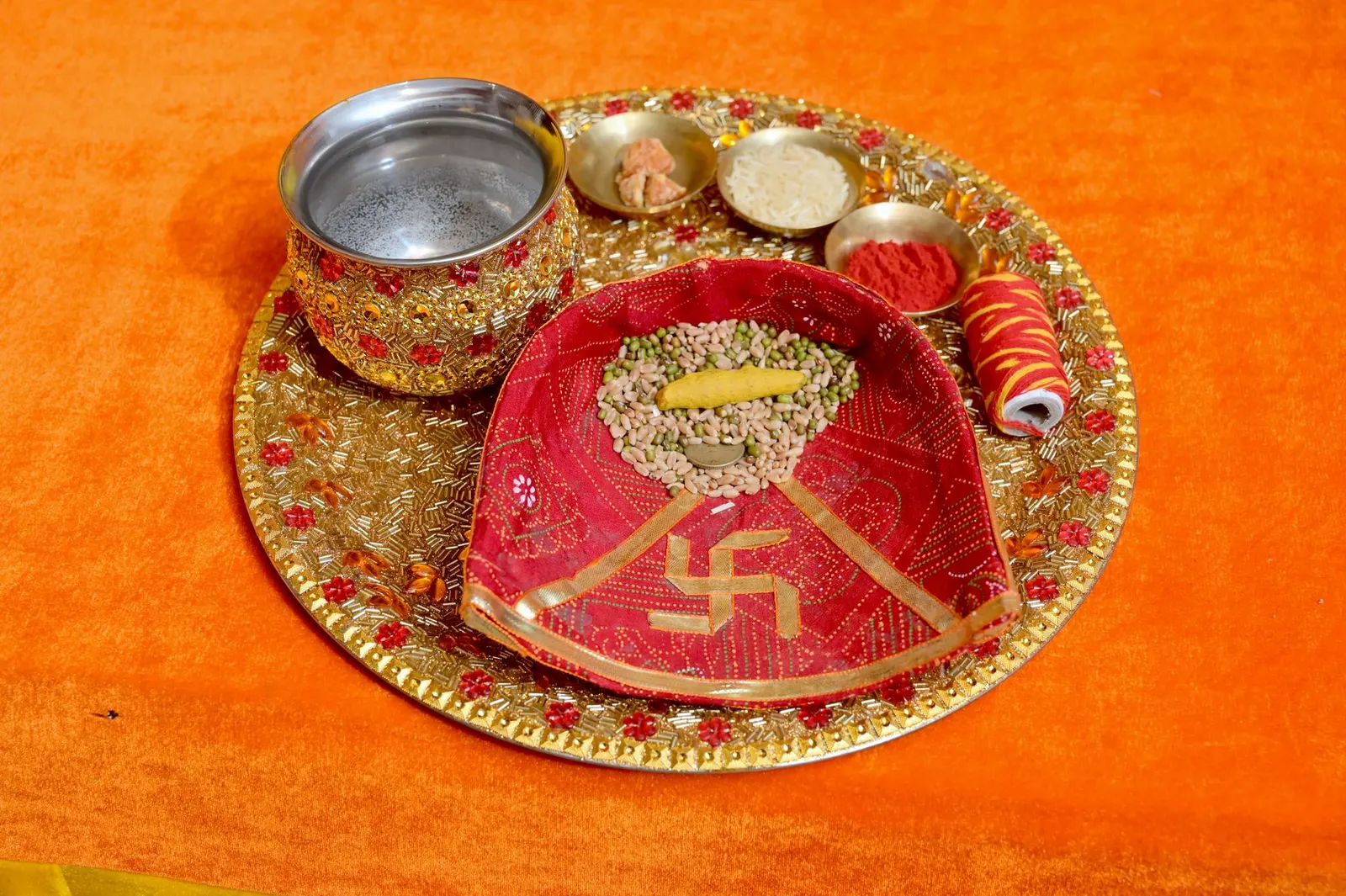
Chadhava (चढ़ावा) means "that which is offered" or "that which is placed before." It comes from the same root as the Hindi verb chadhna: to climb, to rise, to be placed upon something higher. When you offer chadhava, you aren't performing an elaborate rite with a long sankalp, mantras and a fire. You're placing something - flowers, fruit, cloth, sweets, a coin, sometimes just water and a lit diya - before the deity as a gesture of devotion, gratitude or request.
Think of it as the difference between writing a formal letter and sending a short, sincere message. Both mean it. They're different registers of the same relationship.
What Is Chadhava in Temple Worship, and What Isn't It?
People ask what is chadhava in temple practice because the word gets used loosely. Strictly, it is the offering itself, and it is distinct from both the full puja and the prasad.
A full puja usually involves an invocation (avahan), a structured sequence of sixteen steps (shodashopachara), deity-specific mantras, and a sankalp naming the person, their gotra and their purpose. It's built for occasions: a house blessing, a health crisis, ancestral rites, a planetary dosha.
Chadhava skips most of that scaffolding. It is the act of offering, with no elaborate structure required. That's why it suits:
- A quick thanksgiving after something good happens: a job offer, safe travel, an exam result
- A standing weekly or monthly practice at a family deity's shrine
- Marking a moment reverently without the time, cost or need for a full ceremony
- Requests made in passing: protection before a long drive, a relative's recovery, calm before a hard decision
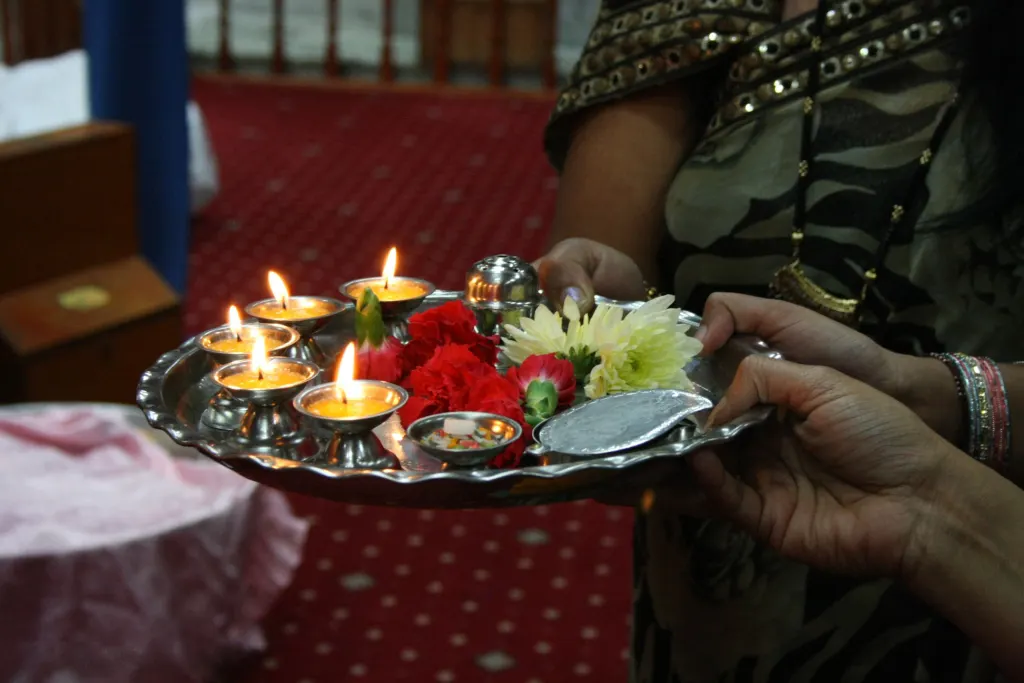
Common offerings vary by deity and region: a red chunari and bangles at a Devi shrine, black sesame and til-oil lamps for Shani, yellow cloth for forms of Vishnu, bel leaves and milk for Shiva, and marigolds almost everywhere. None of it is expensive. All of it is meant sincerely.
Devotion Doesn't Require Elaborateness
There's a quiet theological point in chadhava that many people miss. Hindu tradition has never insisted that devotion must be expensive or exhausting to count. In the Bhagavad Gita (9.26), Krishna says he accepts even a leaf, a flower, a fruit or water offered with love: patram pushpam phalam toyam. Chadhava is that verse in practice.
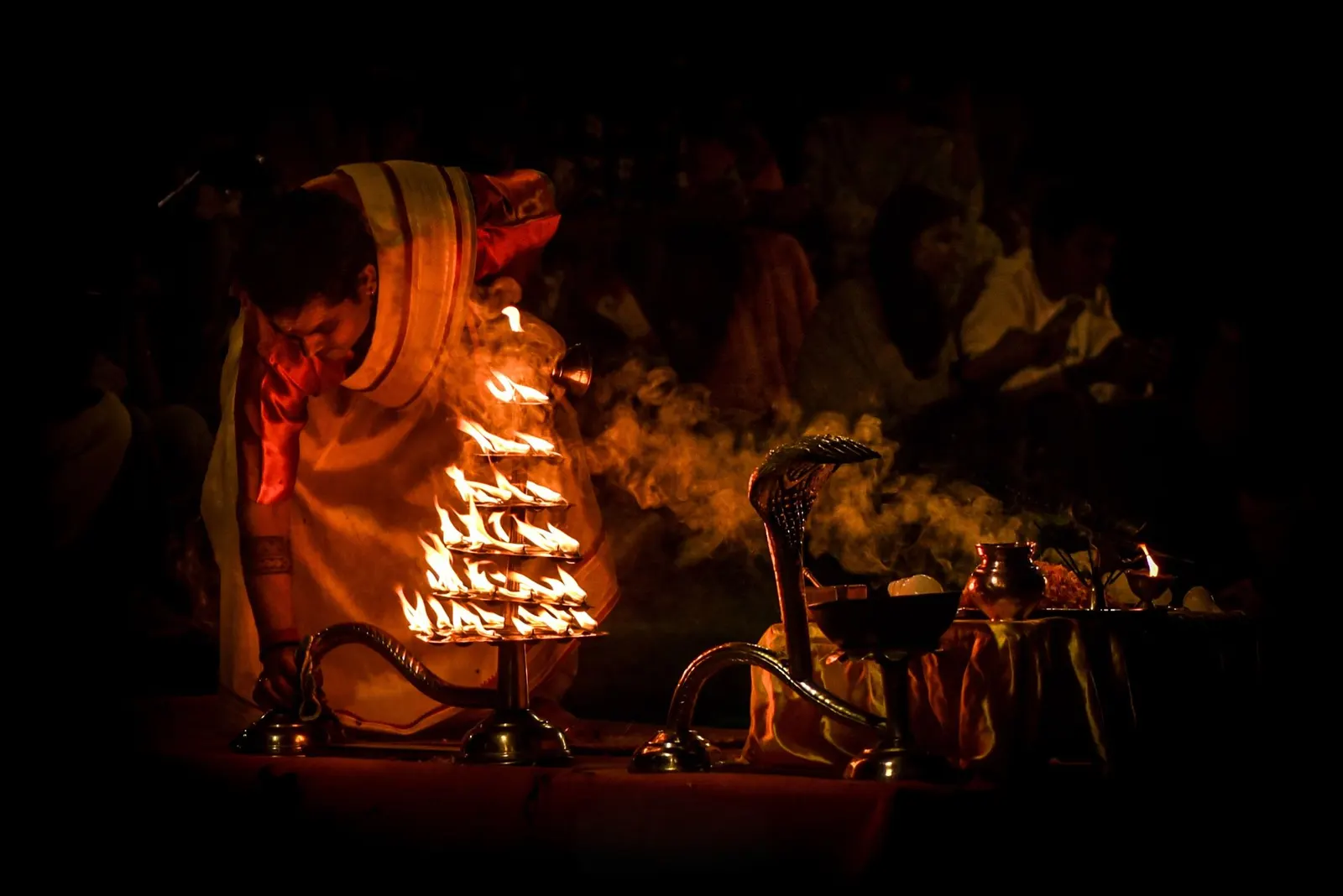
This matters for anyone who feels puja must look a certain way to "count" - a certain number of items, a certain length, a priest chanting for an hour. A single diya lit with real attention is chadhava. A coconut broken at a roadside shrine before an exam is chadhava. The scale was never the point; the sincerity was.
Chadhava From a Distance
Because chadhava is about presence and offering, people assume it only happens in person at the temple gate. For families who can't reach a particular temple - because of distance, health, or living in a city with no shrine to that deity - the common question is ghar baithe puja kaise karayein: how do I get a puja done while staying at home? For chadhava, the answer is to have the offering made on your behalf, with your name carried to the sanctum by someone physically there.
If you can walk to your local mandir, that's a perfectly good way to offer chadhava. If you can't, or you want the offering made at a specific tirtha, a priest can do it for you.
Online Chadhava Offering: How It Works
An online chadhava offering keeps the essentials of the ritual and changes only who carries the plate. At DevPravas, the Chadhava (Prasad Offering) is made at a temple in Ujjain by a pandit who speaks your name and gotra as the offering is placed. It starts at ₹3,100 for the Basic package, ₹4,100 if you want to watch it live, and ₹5,100 with a conference call so family in different cities can join together. A Hindu family in Birmingham can watch the offering on a Sunday morning, and grandparents in Kolkata can join the same call.
Prasad from the offering is then shipped home in an Aashirwad box. For what that box contains, read what's inside the Aashirwad prasad box. You can see the ritual on the Chadhava page and browse fuller ceremonies, like a Satyanarayan Katha, on the pujas page. Families outside India can read our NRI page for time-zone details.
Is an E-Puja Offering the Same Thing?
"E-puja offering" is the broader term for any offering booked online, from a simple chadhava to a full homam. What makes one meaningful isn't the booking method but whether it is actually performed, in your name, at the temple. A live stream lets you see that happen rather than simply trust that it did.
When Chadhava Isn't Enough, and When It's Exactly Right
Chadhava isn't a substitute for every ritual need. For a specific dosha, a sankalp for a major life event, or ancestral rites, a structured puja is the right tool. But for gratitude, a quick request, a standing devotional habit, or introducing children to worship without asking them to sit still for two hours, chadhava isn't the lesser option. It's the right-sized one.
FAQ: Chadhava, Answered
What is the meaning of chadhava in Hinduism?
Chadhava means "that which is offered": flowers, fruit, cloth, sweets, a coin or a lit diya placed before a deity with devotion. The Chadhava puja meaning is less about elaborate procedure and more about sincerity, echoing the Gita's "a leaf, a flower, a fruit, water." See the Chadhava page for how an offering is made on your behalf.
Is chadhava the same as prasad?
No. Chadhava is what you offer to the deity; prasad is what comes back to you, the blessed portion of that offering. Chadhava is the gesture; prasad is its echo. If you book an offering through devpravas.in, the prasad is shipped to you afterwards; read what's inside the prasad box to see what arrives.
Can chadhava be offered online without visiting the temple?
Yes. Devotees far from a particular temple have long sent offerings with relatives or priests. An online chadhava offering does the same thing, with a pandit speaking your name and gotra at the temple and a live stream so you can watch. Families in the UK, US and Canada can see scheduling details on our NRI page.
What should I offer as chadhava?
Offer what's traditional for the deity and what you can give sincerely: flowers and sweets almost anywhere, a red chunari for Devi, bel leaves for Shiva, til oil for Shani, yellow cloth for Vishnu. Cost doesn't determine value. If you're unsure, a coordinator can explain what's customary; browse the pujas page to see options.
Does chadhava need a priest?
Not always. Many people offer chadhava themselves at a home shrine or temple counter. When the offering carries a specific request or is made in a family's name, for example alongside a Kaal Bhairav protection ritual, having a priest present it formally adds weight and correctness.
How much does an online chadhava cost?
Prices vary by provider and temple. At DevPravas, a Chadhava (Prasad Offering) starts at ₹3,100 for the Basic package, ₹4,100 with a live stream and ₹5,100 with a conference call, with prasad shipped home. Full details, including what each package includes, are on the pricing page.
Book a Chadhava, Wherever You Are
If there's an offering you've been meaning to make - for a parent's health, a child's exam, a decision you're sitting with - you don't need to wait for a trip to make it. Whatever you take from the Chadhava puja meaning, it was never about how much you bring; it's about showing up. Message us on WhatsApp and we'll walk you through it, or go straight to book.html to see available slots. Whether you're in Kolkata or Birmingham, the offering still reaches the sanctum.
Share this article
Found this useful? Pass it on to a family member who is weighing the same question.