Navgraha Puja Benefits Explained: The Nine Planets and Your Life Path
By DevPravas Editorial Team · · 6 min read
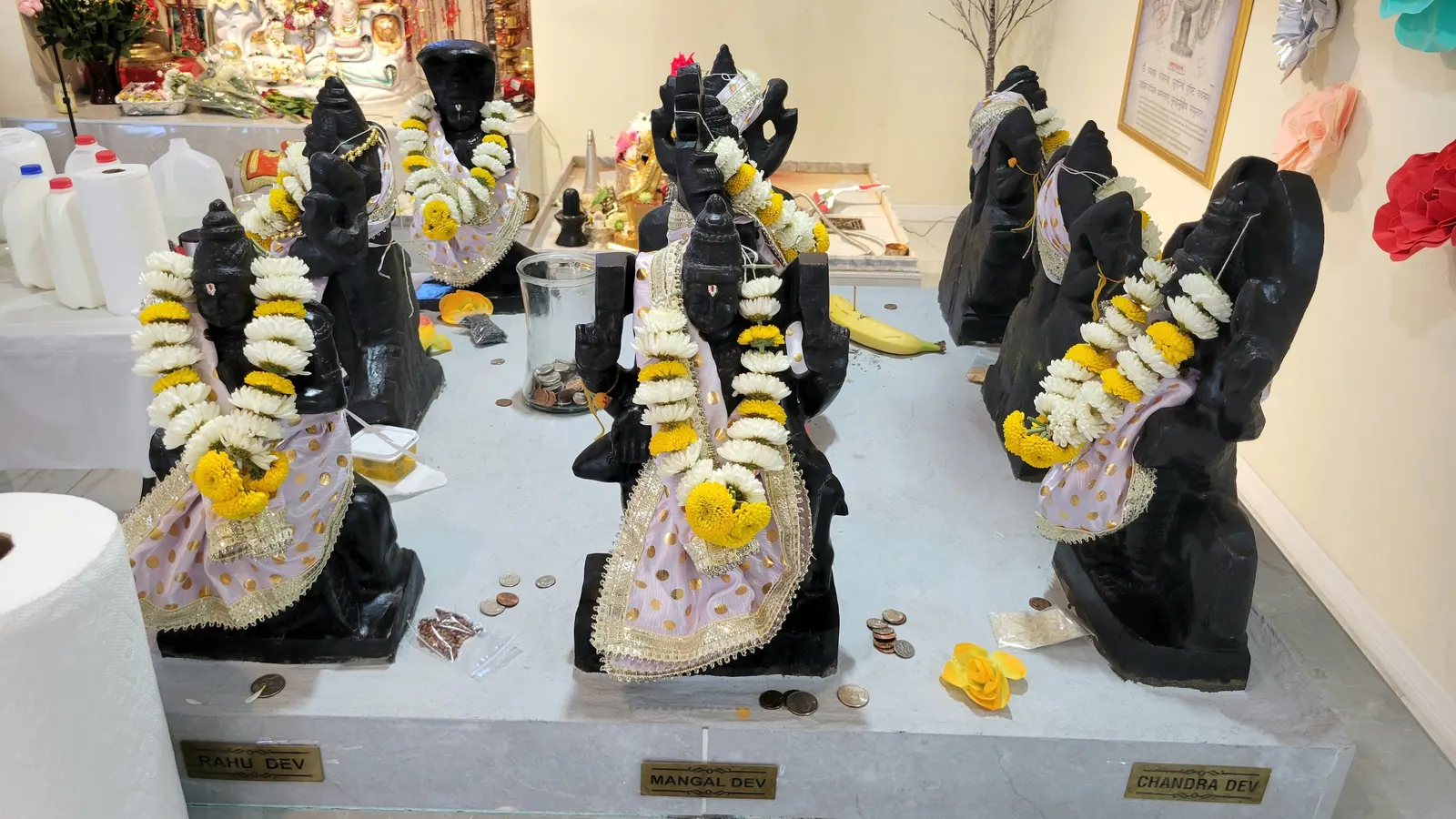
A friend from Pune once described her father's ritual as a habit rather than a belief. Every Saturday morning he walked around the Navgraha shrine at the small temple near their home nine times, murmuring names most of us have heard since childhood: Surya, Chandra, Mangal, Budh, Guru, Shukra, Shani, Rahu, Ketu. He never explained it. He just said, "Grahon ko shant rakhna padta hai" - you have to keep the planets calm. It took his daughter thirty years and a rough stretch at work to ask what Navgraha puja benefits actually are, and why families still turn to it.
That's what this piece is about - not astrology as prophecy, but as a framework people have used for centuries to make sense of turbulence, and the puja built around it.
The Nine Planets in Vedic Astrology
Navgraha means "nine grahas" - often translated as planets, though graha more literally means "one who seizes" or influences. The nine planets in Vedic astrology aren't all planets in the modern sense. Sun and Moon are included, and Rahu and Ketu are shadow points - the lunar nodes where the Moon's path crosses the Sun's. Jyotish is a symbolic map of influence, not astronomy.
Each graha is associated with a domain of life:
- Surya (Sun): confidence, authority, father, health
- Chandra (Moon): mind, emotions, mother
- Mangal (Mars): energy, courage, property, siblings
- Budh (Mercury): intellect, speech, business
- Guru (Jupiter): wisdom, children, expansion
- Shukra (Venus): love, comfort, marriage, arts
- Shani (Saturn): discipline, work, delay, karma
- Rahu: ambition, the unfamiliar, foreign lands
- Ketu: detachment, spirituality, sudden change
A Navgraha puja is performed when one or more of these is considered weak or afflicted in a birth chart - or simply as a family's way of asking for balance before an important step.
Navgraha Puja Benefits: What Families Hope For
Traditionally, the Navgraha puja benefits families look for are balance and steadiness across these domains: fewer obstacles at work, calmer relationships, better health, clearer thinking before big decisions. Honest pandits describe these as blessings sought, not outcomes guaranteed. The puja offers a structured way to act with intention during a difficult period, and many people find the ritual itself steadying.
In practice, four situations bring people to it:
- A stalled career or business, often linked in a chart reading to Shani or Surya.
- Worries about health or peace of mind - alongside, never instead of, medical advice.
- Before a major decision such as a marriage, a move or a new business.
- A chart reading that recommends it, sometimes as the main remedy and sometimes alongside a specific dosha puja such as Kaal Sarp or Manglik.
Navgraha Shanti Puja: When and How Often
Navgraha shanti puja - "pacification of the nine planets" - is the name most astrologers use when recommending it as a remedy. Common times include an unfavourable dasha period, a major transit such as Shani moving signs, around eclipses, or on a person's birth-star day. Saturdays are traditional for many families, but your pandit may suggest a specific tithi from the panchang. Some households repeat it once a year as a kind of spiritual maintenance.
How the Puja Is Performed
The structure is broadly consistent, though mantras and offerings vary by region and by which grahas need attention:
- Sankalp: the pandit states your name, gotra and intention, dedicating the ritual to you.
- Invocation of each graha: each of the nine is invoked with its own mantra and traditionally associated grain, colour and flower.
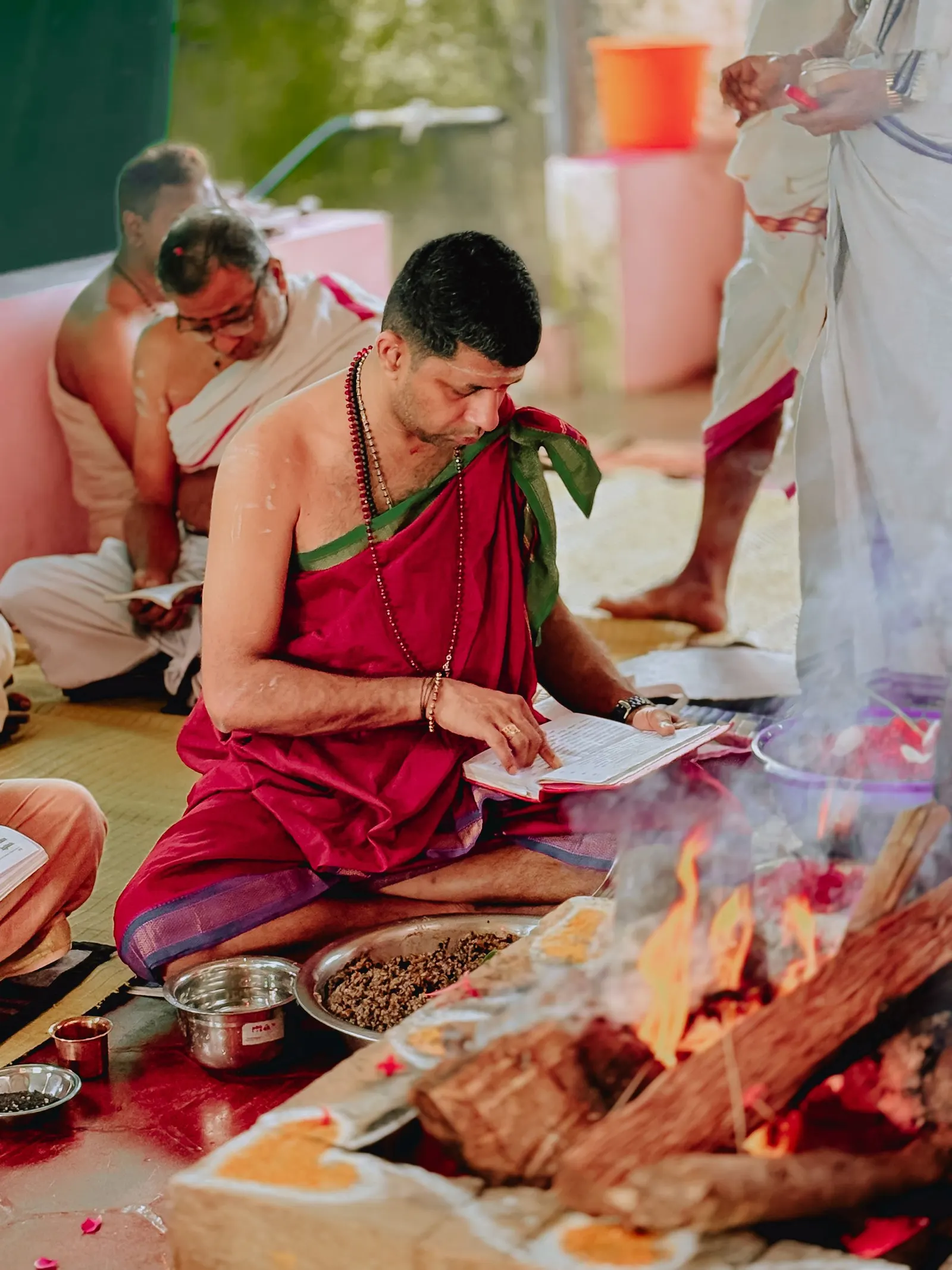
- Havan: offerings are made into the sacred fire for each graha; the number of offerings depends on the scale of the puja.
- Aarti and prasad: the ceremony closes with aarti and prasad.
At DevPravas, the Navgraha puja is performed in Ujjain. Packages are ₹9,100 (Basic), ₹10,100 (Live Stream) and ₹11,100 (Conference Call), with custom options on request.
Ghar Baithe Puja Kaise Karayein?
Ghar baithe puja kaise karayein - "how do I get a puja done from home?" - is one of the most common questions families ask, in India and abroad. For a Navgraha puja the answer is simple. You can invite a pandit to your home, go to a temple with a Navgraha shrine, or book a Navgraha puja online and watch it live.
Take a working couple in Pune who can't take a weekday morning off, or a family in Ottawa where the nearest temple that performs a full Navgraha havan is hours away. For both, a live-streamed puja with their names in the sankalp is a practical middle path. None of these routes is "more correct" - what matters is a qualified pandit, the correct vidhi and a sincere sankalp.
What Happens in a Navgraha Puja Online
When you book a Navgraha puja online, a coordinator confirms your names, gotra and (if you have them) birth details, then fixes a date and time in your own time zone. On the day, you watch the pandit perform the full puja, hear your details in the sankalp, and receive a same-day digital certificate. Prasad can be shipped to you afterwards. Families abroad can see how scheduling works on our NRI page.
Before the day, note down which planet or area of life is worrying you, so the pandit can emphasise the right grahas in the sankalp. Some families also keep a small diya lit at home during the stream and say a simple prayer at the end, so the ritual feels present in the house as well as at the temple.
FAQ: Navgraha Puja
What are the benefits of Navgraha puja?
The Navgraha puja benefits families seek are balance across the areas each planet governs - career, health, relationships, peace of mind - and fewer obstacles before important decisions. It's a remedial ritual, not a guarantee, and many find the act of doing it steadying in itself. The Navgraha puja page explains how it's performed.
Who should do Navgraha shanti puja?
It's often recommended for people going through a difficult dasha, facing repeated obstacles at work or in relationships, or whose chart shows weak or afflicted planets such as Shani or Rahu. Many also do it before a major life step. If a visa or job delay is your concern, read our post on visa and job delays.
Which day is best for Navgraha puja?
Saturdays are traditional for many families, and some prefer a birth-star day, an eclipse period or a major planetary transit. Ideally, your pandit picks an auspicious tithi from the panchang based on your chart. If you don't have a preference, a coordinator can suggest dates when you book.
Can Navgraha puja be done online or at home?
Yes, either way. A pandit can perform it at your home, or you can book it online and join live while it's performed at the temple with your name and gotra in the sankalp. Families across India and abroad book the online version through devpravas.in; our puja catalog lists it with other planetary remedies.
How is Navgraha puja different from Kaal Sarp Dosha puja?
Kaal Sarp Dosha puja targets one specific configuration - all seven visible planets between Rahu and Ketu. Navgraha puja addresses all nine planets together and is often used as general balancing or maintenance. Some astrologers recommend both. Read Kaal Sarp Dosha and the NRI Career Slump for a closer look at the difference.
How often should Navgraha puja be done?
There's no fixed rule. Some families do it once, when a chart reading recommends it; others repeat it every year or at major transits such as Shani changing signs. Your astrologer's advice for your chart is the best guide. Families abroad can find time-zone-friendly scheduling on our NRI page.
Keep Reading
If a career slump brought you here, see Kaal Sarp Dosha and the NRI Career Slump. For marriage-related concerns, read Manglik Dosha Explained: Causes, Myths, and Remedial Pujas.
Book Your Navgraha Puja
Whether the concern is a stalled career, a restless mind or simply a family tradition, understanding the Navgraha puja benefits helps you approach the ritual with clear expectations. Message us on WhatsApp to check dates for a live puja from Ujjain, or go straight to book.html to reserve your slot.
Share this article
Found this useful? Pass it on to a family member who is weighing the same question.